






Non-Ferrous Metal Scrap EPR Compliance in India

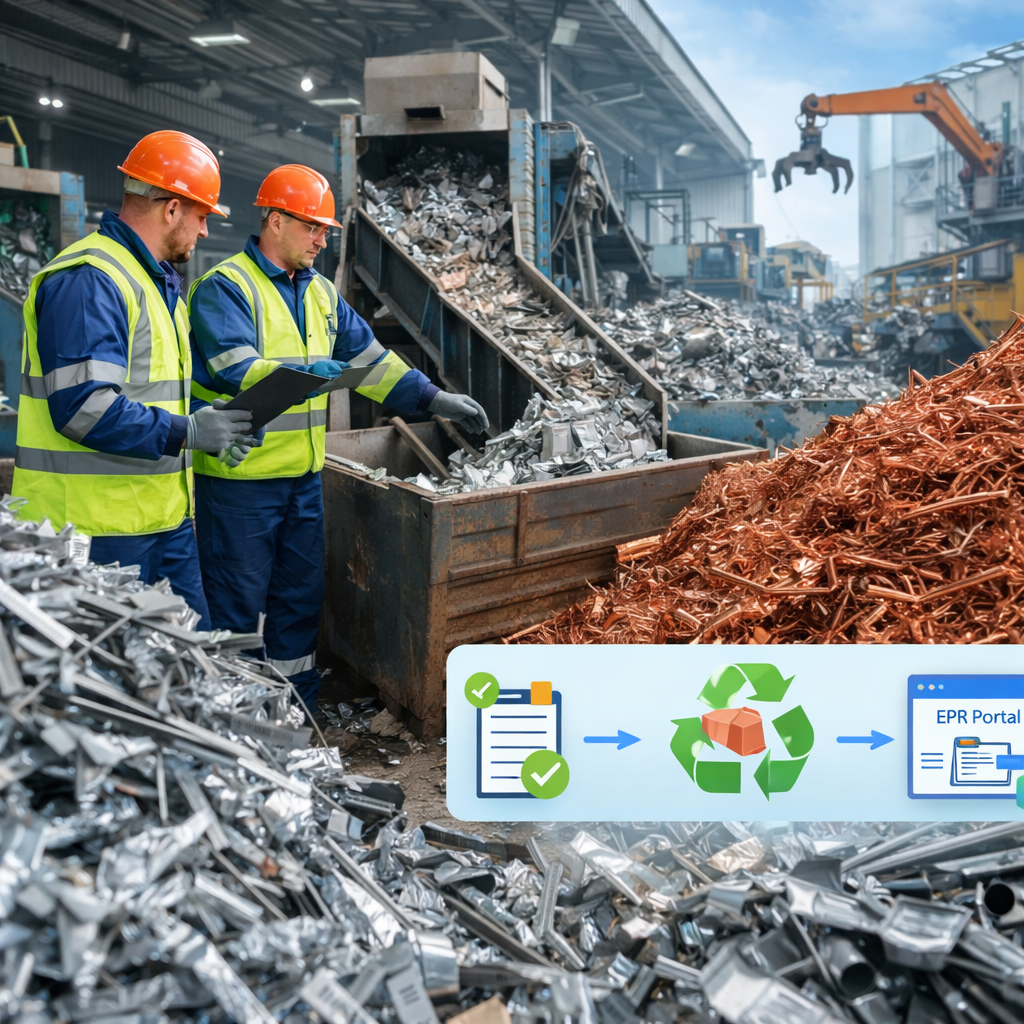
Non-ferrous (Non-Fe) metals such as aluminium, copper, lead, zinc, and other valuable materials play a critical role in India’s circular economy.

Preparing for EPR for Scrap of Non-Ferrous Metals (Effective 1 April 2026)

Central Pollution Control Board (CPCB) has introduced a new Extended Producer Responsibility (EPR) framework for scrap of non-ferrous metals through the Hazardous and Other Wastes (Management and Transboundary Movement) Amendment Rules, 2025.

These rules establish a structured recycling ecosystem for aluminium, copper, zinc, and their alloys, requiring producers and other stakeholders to ensure environmentally sound management and recycling of scrap generated from their products.

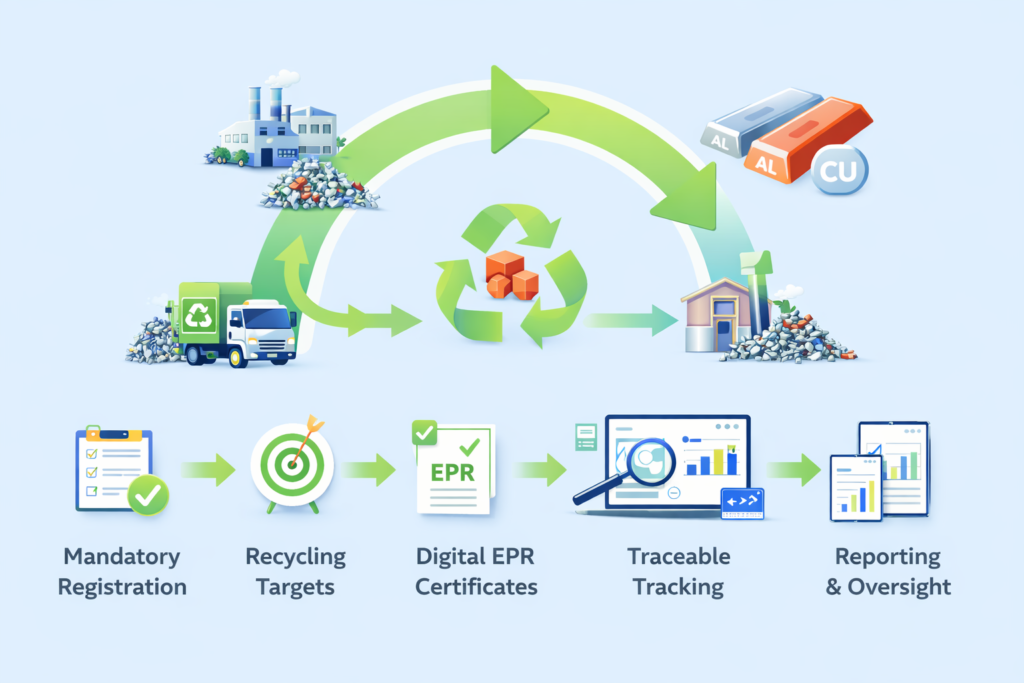
The new compliance regime will come into force from 1 April 2026, introducing registration requirements, recycling targets, digital tracking through an online portal, and a tradable EPR certificate mechanism.

ReCirculytics supports organisations in preparing for and complying with the upcoming non-ferrous metal scrap EPR framework, enabling businesses to establish compliant and audit-ready systems before regulatory enforcement begins.

Understanding Non-Ferrous Metal Scrap EPR

Non-ferrous metals such as aluminium, copper, zinc, and their alloys are widely used across industries including packaging, electrical equipment, construction, consumer goods, and manufacturing.
While these metals are highly recyclable, improper management of scrap can lead to resource loss, environmental damage, and informal recycling practices.
The new EPR framework requires producers to ensure that scrap generated from their products is collected, recycled, and managed in an environmentally sound manner.

The framework introduces:

Applicability of the Rules

The EPR framework for non-ferrous metal scrap applies to entities involved in the manufacture, sale, import, collection, refurbishment, and recycling of products made from non-ferrous metals. Entities required to register on the CPCB portal include:

All obligated entities must obtain registration on the CPCB online portal before undertaking regulated activities.

Products Covered Under the Rules

The rules apply to a wide range of products made from non-ferrous metals.

S.No. Products
1Cans for beverages, aerosols and other such product
2Packaging Foils for food, pharma and other such product
3Doors, windows, shutters
4Aluminium Composite Panel
5Aluminium partitioning, grills and other such product
6Utensils (cookware, canisters, storage and other such product)
7Furniture tables, chairs, benches, ladders etc. including doorknobs, handles, hardware's
8Roofing and Ceiling sheets
9Motors, pumps, alternators and other such product (other than automobile grade)
10Conductor cables and Wires, strips (other than automobile grade)
11Sanitary ware and fittings
12Electrical fittings (other than automobile grade)
13Aluminium Alloy Bicycle
14Transformer (other than automobile grade)
15Electric Generator sets
16Centralized air conditioning plants
17Apparel products e.g. Belt Buckles, Zip, Shoes
18Toys

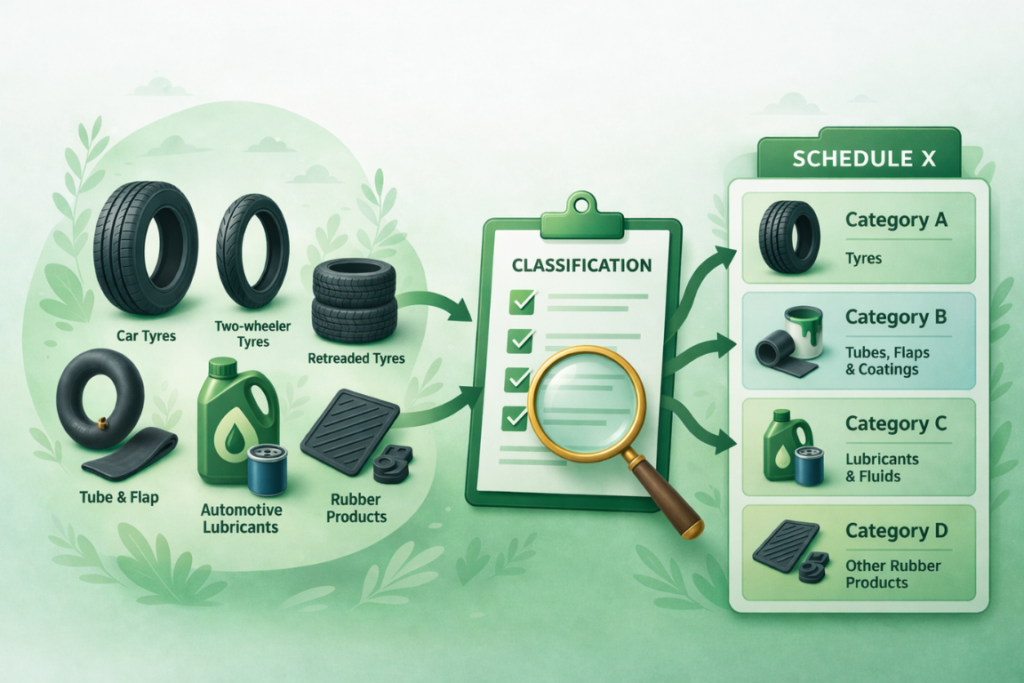
These products are listed under Schedule X of the rules, which identifies the product categories covered under the EPR framework.

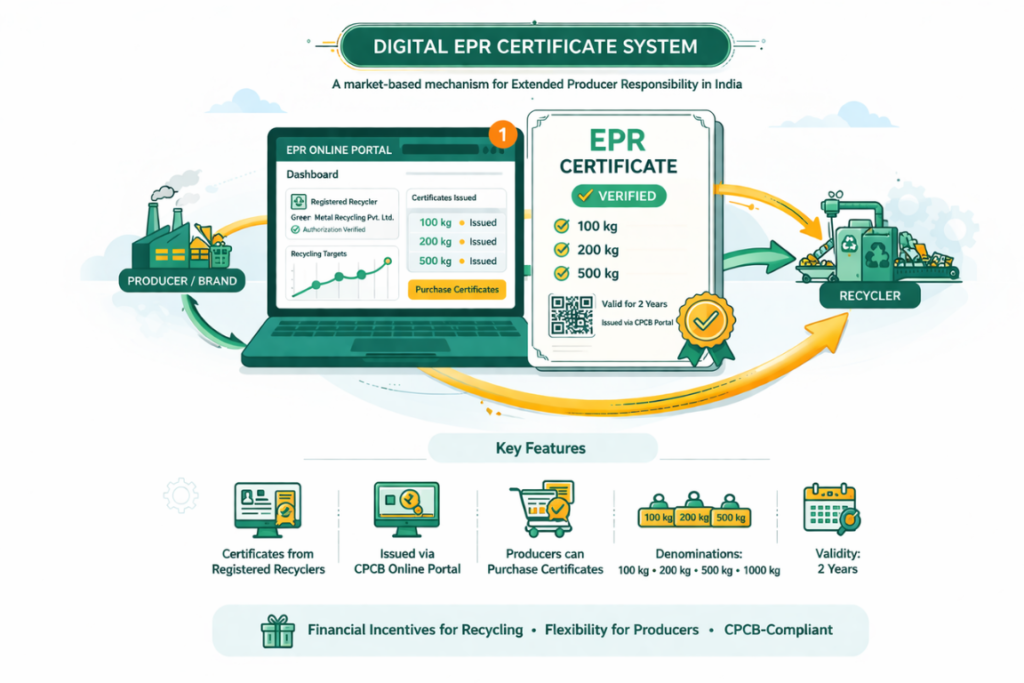
Digital EPR Certificate System

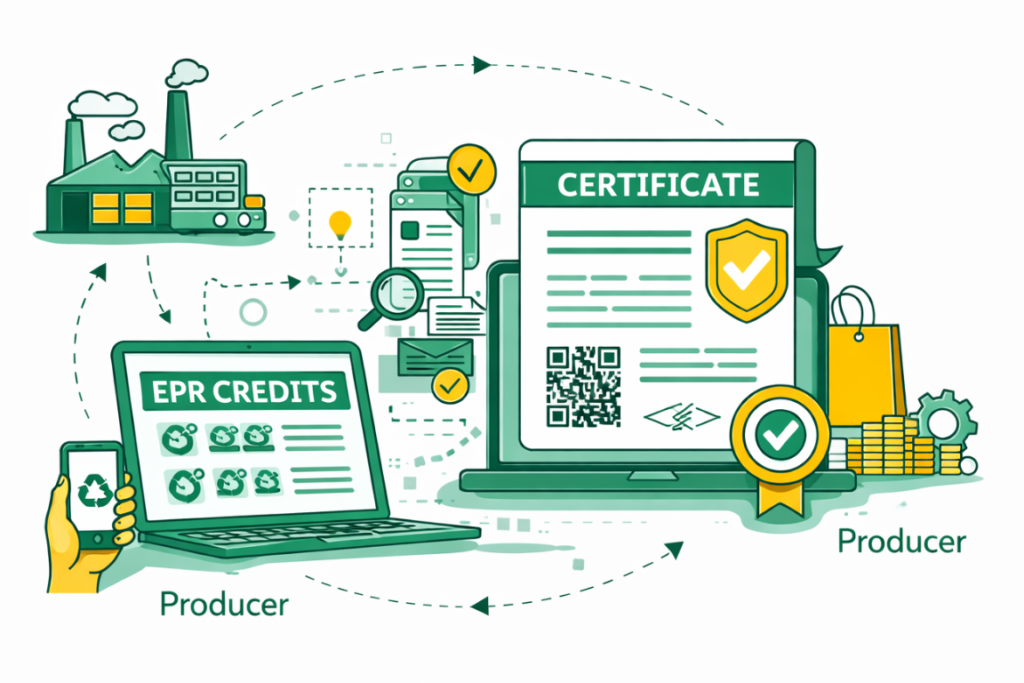
The framework introduces a digital EPR certificate mechanism similar to other EPR regimes in India.

Key features include:

This market-based system creates financial incentives for recycling while allowing producers flexibility in meeting their obligations.

Mandatory Registration on CPCB Portal

The rules require all obligated entities to register on an online portal developed by the Central Pollution Control Board (CPCB).

The portal will be used for:

Entities will not be permitted to conduct regulated activities without portal registration.

Reporting and Compliance Filings

Registered entities must submit periodic reports on the portal.

Typical compliance filings include:

For example, annual returns must generally be filed by 30 June of the following financial year.

Minimum Recycled Content in New Products

Manufacturers will also be required to use a minimum percentage of domestically recycled metal in new products, as specified in the rules.

Sr. No. Type of Metal Minimum use of Recycled materials*
2028-29 2029-30 2030-31 2031-32
1 Aluminium 5 10 10 10
2 Copper 5 10 15 20
3 Zinc 5 10 15 25

*This percentage is with respect to the total quantity of the non-ferrous metal used in 25 manufacturing of that product.

This provision aims to:

Environmental Compensation for Non-Compliance

Failure to comply with the EPR framework may lead to:

Environmental compensation may still be imposed even if the obligated entity subsequently fulfils its obligations.

How ReCirculytics Supports Non-Ferrous Metal Scrap EPR Compliance

ReCirculytics provides end-to-end advisory and operational support for organisations navigating the upcoming EPR framework for non-ferrous metal scrap. Our services include:

All obligated entities must obtain registration through the CPCB E-Waste EPR Portal before undertaking regulated activities.

Why Businesses Should Prepare Before April 2026

Although the rules become effective on 1 April 2026, early preparedness is critical.

Organisations that begin planning early will benefit from:

ReCirculytics helps organisations design and implement structured compliance frameworks ahead of regulatory enforcement.

Our Approach

Assess

Evaluate material streams, scrap generation, and regulatory exposure.

Structure

Design documentation and recycling channel frameworks aligned with compliance requirements.

Execute

Implement authorised channelisation and record management systems.

Monitor

Ensure continuous documentation accuracy and audit readiness.
Prepare for Non-Ferrous Metal Scrap EPR Compliance

The upcoming EPR framework for scrap of non-ferrous metals represents a major regulatory shift in India’s resource management ecosystem.

With structured compliance planning and reliable recycling partnerships, businesses can turn regulatory obligations into circular economy opportunities.

ReCirculytics supports organisations in building transparent, compliant, and future-ready non-ferrous metal scrap management systems.

Connect with our team to prepare your organisation for non-ferrous metal EPR compliance before April 2026.

Frequently Asked Questions

Non-ferrous metals are metals that do not contain significant amounts of iron, including aluminium, copper, lead, zinc, and other high-value recyclable materials.

Non-ferrous metals are highly recyclable and economically valuable. Proper channelisation through authorised recyclers prevents informal processing, environmental contamination, and regulatory risk.

Producers, manufacturers, importers, industrial facilities, and scrap generators handling non-ferrous metal materials may have compliance obligations depending on regulatory applicability.

Common materials include aluminium scrap, copper scrap, lead and zinc scrap, and mixed non-ferrous metal waste generated from manufacturing, dismantling, or industrial processes.

Yes. Proper documentation, including quantity records, authorised recycler receipts, and channelisation proof, is essential to maintain compliance and traceability.

Stay Structured. Stay Compliant.

ReCirculytics helps organisations build transparent, traceable, and regulator-aligned Non-Ferrous compliance systems designed for long-term sustainability.