End-of-Life Vehicles (ELV) EPR Compliance in India
Supporting Producers and Registered Vehicle Scrapping Facilities (RVSFs) in ELV Compliance
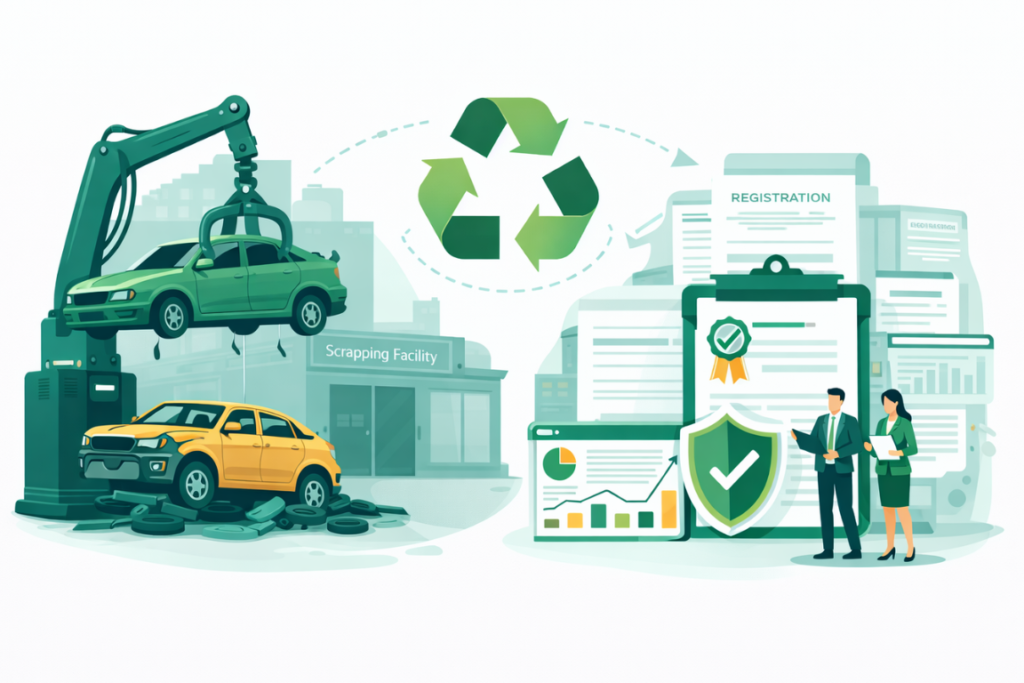
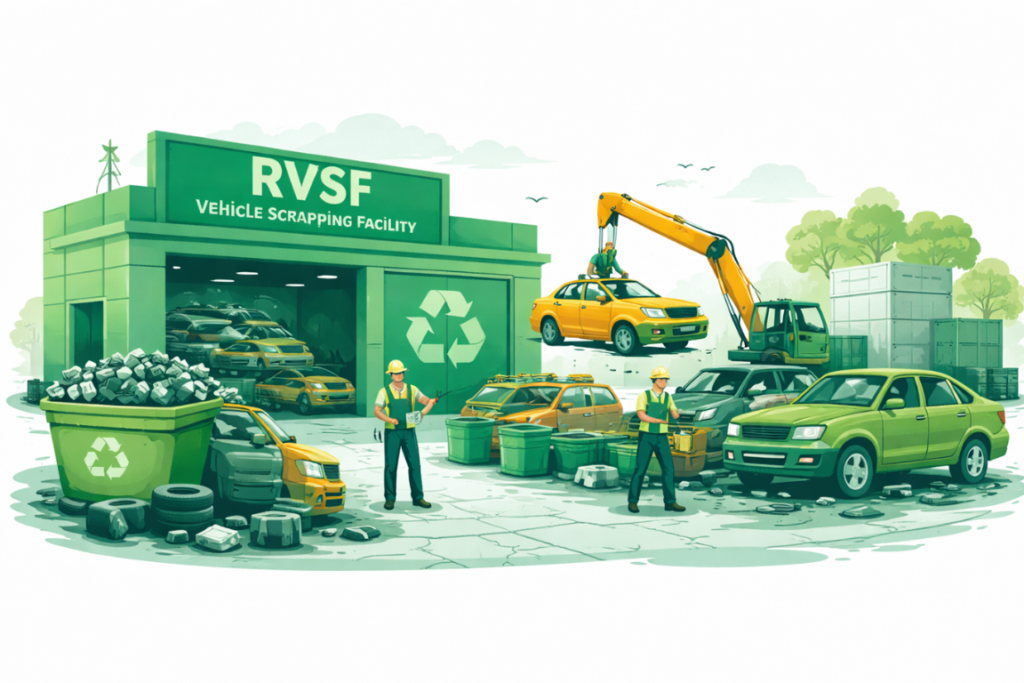
The rapid growth of India’s automotive sector has resulted in increasing volumes of End-of-Life Vehicles (ELVs) that require environmentally sound dismantling and recycling. ELVs contain valuable recoverable materials such as steel, aluminium, plastics, rubber, and electronic components, but they also pose environmental risks if not handled properly.
To address this challenge, the Government of India introduced an Extended Producer Responsibility (EPR) framework for End-of-Life Vehicles under the Environment (Protection) End-of-Life Vehicles Rules, 2025.
The CPCB ELV EPR Portal, launched on 15 January 2026, enables digital tracking of vehicle scrappage, recycling, and compliance reporting.
ReCirculytics provides end-to-end ELV EPR compliance support to both vehicle manufacturers (Producers) and Registered Vehicle Scrapping Facilities (RVSFs). Our services cover registration, compliance strategy, certificate management, reporting, and regulatory audit support.
We help organisations manage ELV EPR obligations with clarity, traceability, and regulatory confidence.
Understanding ELV EPR
Extended Producer Responsibility (EPR) for End-of-Life Vehicles places responsibility on vehicle manufacturers and importers to ensure that vehicles introduced into the market are dismantled and recycled through authorised facilities once they reach the end of their life cycle.
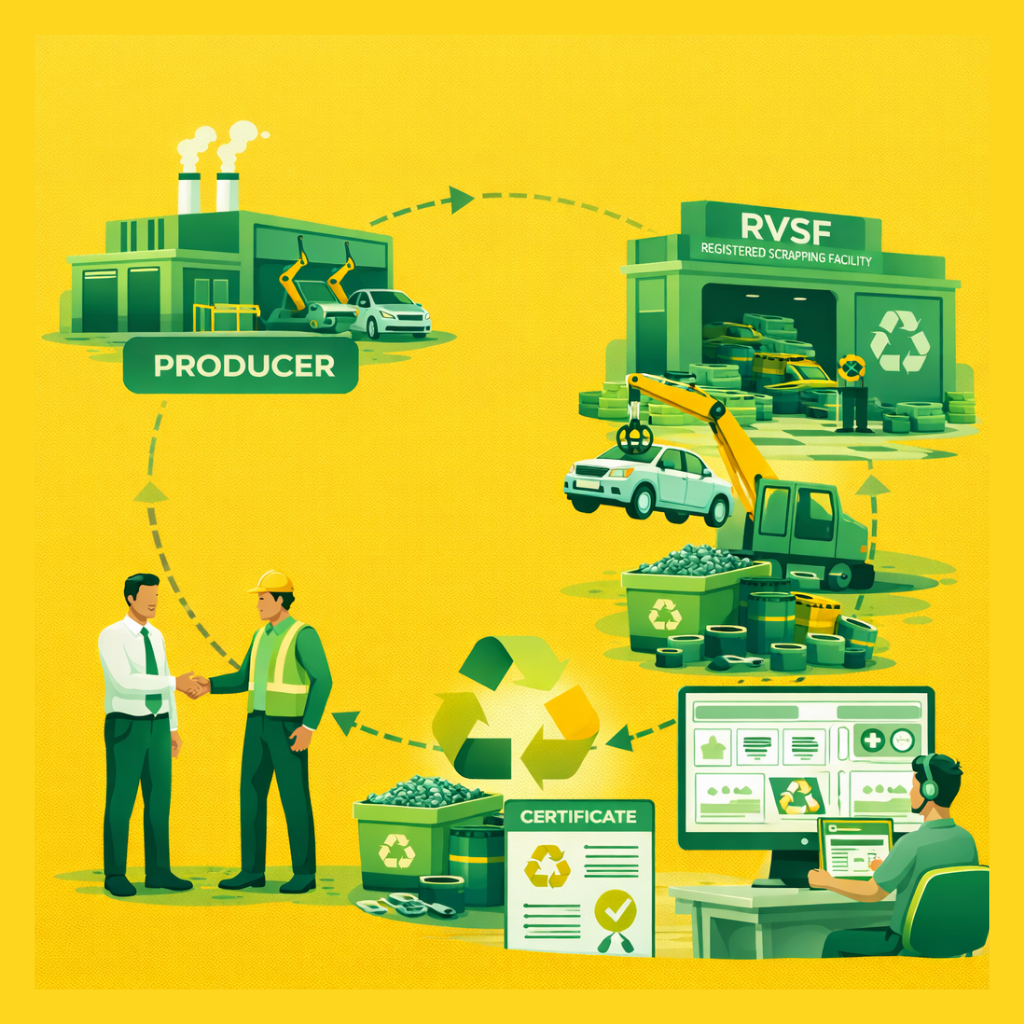
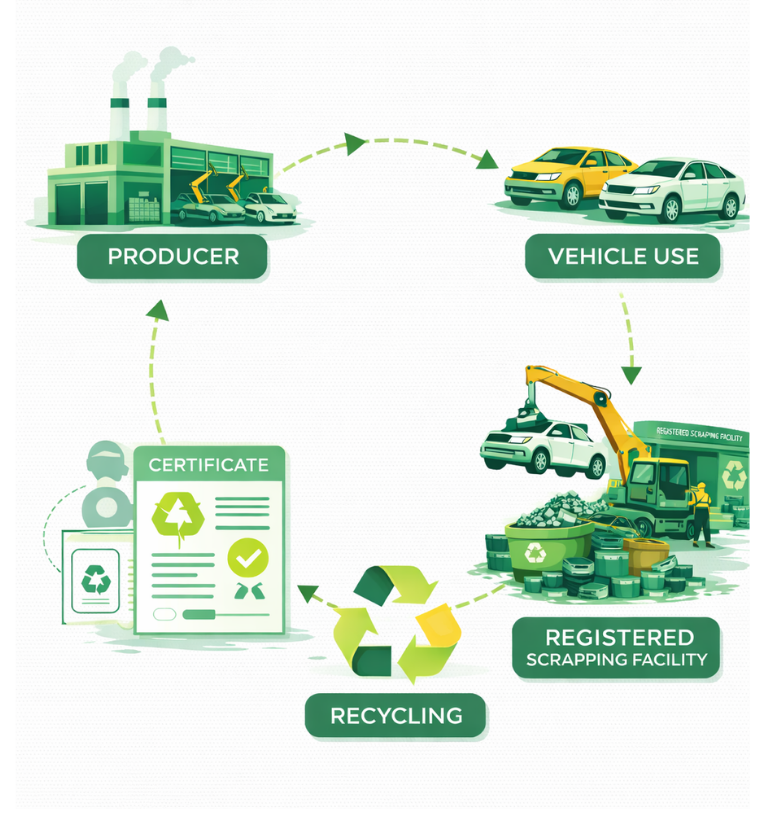
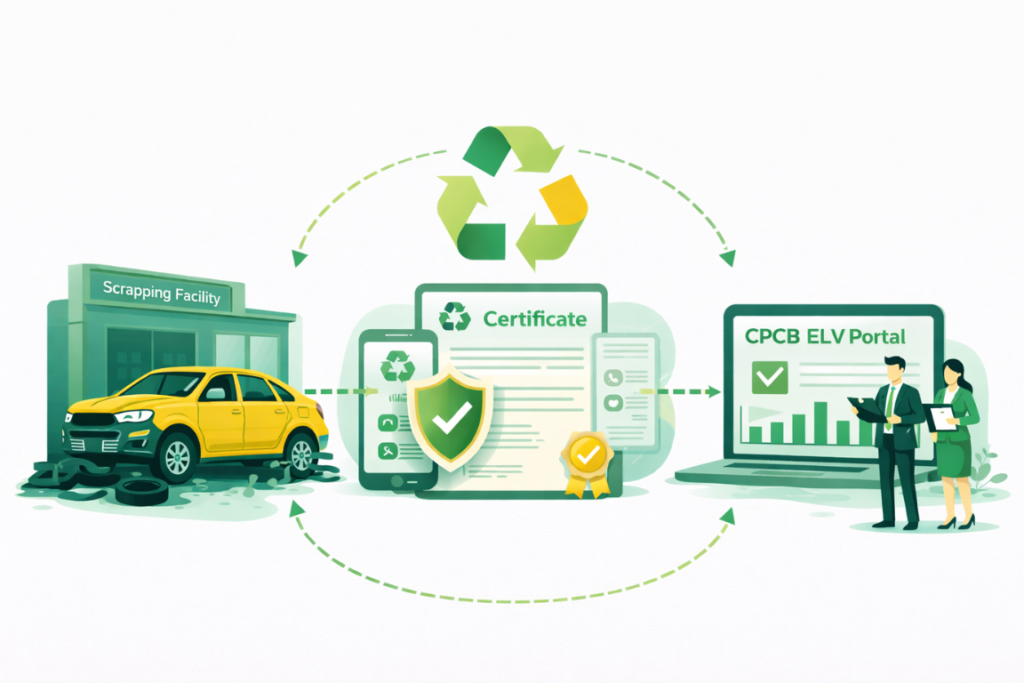
The ELV regulatory framework establishes a digital compliance ecosystem connecting producers and authorised scrapping facilities through the CPCB ELV EPR Portal.
Under this system:
- Producers report vehicles introduced into the market
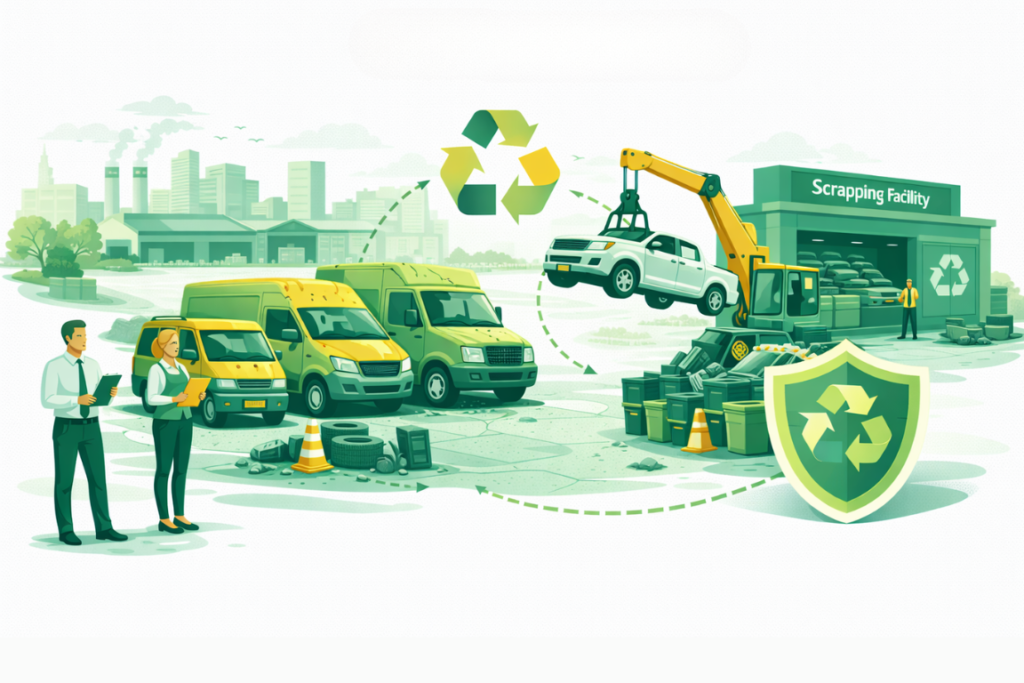
- Registered Vehicle Scrapping Facilities dismantle end-of-life vehicles
- Recycling activities generate ELV recycling certificates
- Producers utilise these certificates to fulfil their EPR obligations
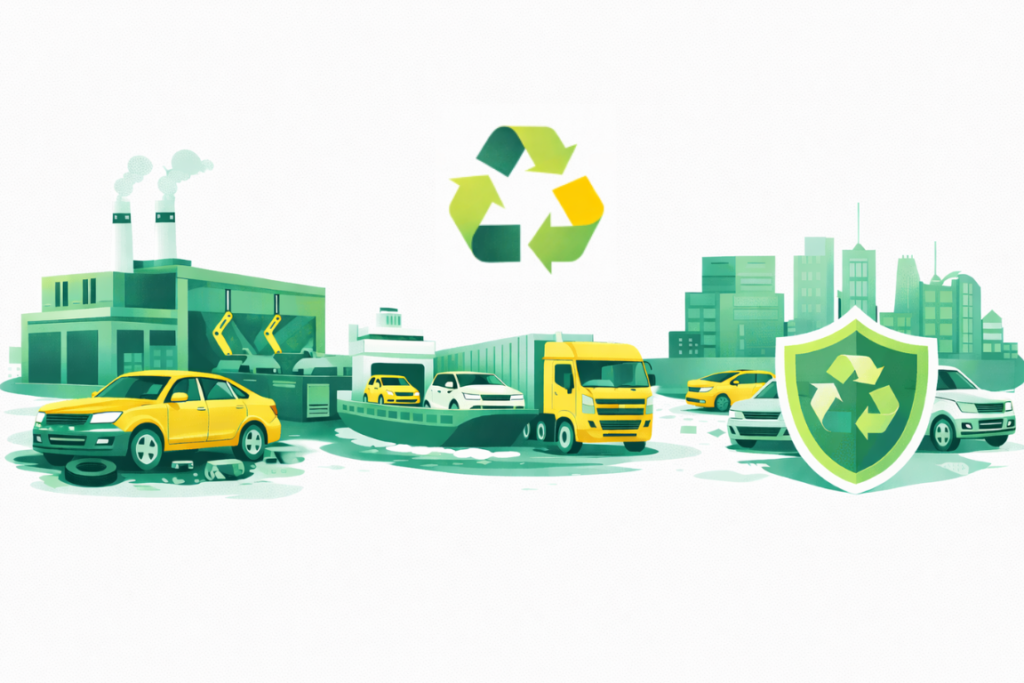
This system ensures traceable material recovery and responsible vehicle dismantling across the automotive lifecycle.
Legal Framework for ELV EPR
ELV management in India is governed by the:
Environment (Protection) End-of-Life Vehicles Rules, 2025
These rules introduce:
- an EPR framework for vehicle manufacturers
- a regulated ecosystem for vehicle scrapping facilities
- a digital monitoring platform managed by CPCB
The ELV EPR Portal enables:
- registration of producers and RVSFs
- reporting of vehicles placed in the market
- monitoring of vehicle scrappage and recycling
- generation and transfer of recycling certificates
- submission of regulatory compliance reports
This framework supports India’s transition toward a circular automotive economy.
Who Needs to Comply
Entities required to comply with ELV EPR regulations include:
Producers (Vehicle Manufacturers and Importers)
Automobile manufacturers and importers introducing vehicles into the Indian market must fulfil EPR obligations for the recycling of end-of-life vehicles.
Registered Vehicle Scrapping Facilities (RVSFs)
Authorised scrapping facilities responsible for dismantling vehicles, recovering materials, and generating ELV recycling certificates.
Bulk Consumer
consumer having ownership of more than one hundred vehicles, and includes State transport undertakings
All obligated entities must register on the CPCB ELV EPR Portal before undertaking regulated activities.
Vehicles Covered Under the ELV Framework
The ELV EPR framework applies to vehicles reaching the end of their operational life, including:
- transport vehicles (average life 15 years)
- non-transport vehicles (average life 20 years)
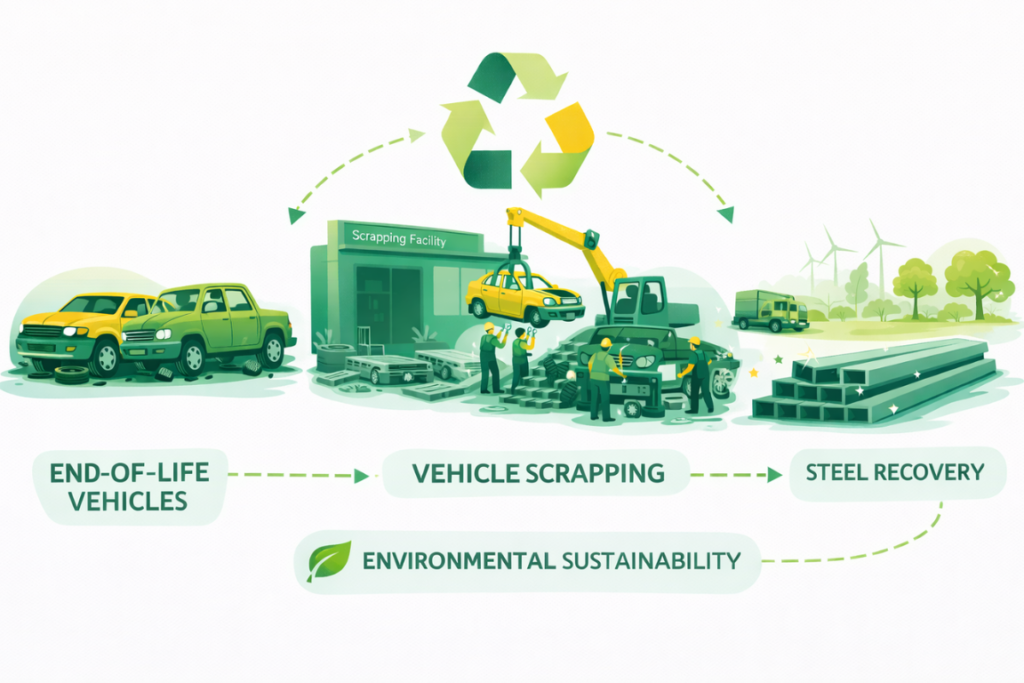
The scrapping of End-of-Life vehicles means scrapping of steel from End-of-Life vehicles and EPR targets comprise of scrapping of steel used in vehicles.
Proper dismantling and recycling enables safe recovery of valuable materials while reducing environmental impact.
ELV Recycling Certificate Mechanism
The ELV EPR system operates through a digital recycling credit mechanism.
Registered Vehicle Scrapping Facilities generate ELV recycling credits when vehicles are dismantled and steel is recovered.
These credits can then be transferred to producers through the CPCB portal to fulfil EPR obligations.
Key elements of the system include:
- certificate generation by authorised RVSFs
- digital traceability through the CPCB ELV EPR Portal
- documentation for regulatory audits
Proper verification of recycling certificates is essential for ensuring regulatory compliance.
Key Regulatory Requirements Under ELV EPR
Organisations operating within the ELV ecosystem must comply with several regulatory requirements.

CPCB Portal Registration
Vehicle manufacturers and Registered Vehicle Scrapping Facilities must register on the CPCB ELV EPR Portal.

Reporting Vehicles Introduced into the Market
Producers must declare the number of vehicles introduced into the market.
Vehicle Scrappage Through Authorised Facilities
End-of-life vehicles must be dismantled through authorised RVSFs.
ELV Recycling Certificate Generation and Procurement
RVSFs generate recycling certificates which producers procure to meet their EPR obligations.
Compliance Reporting
Entities must maintain transaction records and submit compliance reports through the CPCB portal.
Failure to comply may result in regulatory action, environmental compensation, or suspension of registration.
How ReCirculytics Supports ELV EPR Compliance
ReCirculytics provides comprehensive ELV EPR compliance services for both Producers and Registered Vehicle Scrapping Facilities (RVSFs).
Support for Producers
- ELV EPR applicability assessment
- CPCB ELV portal registration
- vehicle sales reporting frameworks
- recycling obligation calculation
- procurement of ELV recycling certificates
- compliance reporting and documentation
- regulatory audit and notice support
Support for Registered Vehicle Scrapping Facilities
- registration support on the CPCB ELV EPR portal
- operational compliance framework development
- ELV certificate generation and transaction support
- documentation and reporting systems
- regulatory advisory and compliance audits
Our approach focuses on practical implementation supported by regulatory expertise, enabling both producers and scrapping facilities to operate within a transparent and compliant ELV ecosystem.
Our Structured Compliance Approach
ReCirculytics follows a structured approach to support ELV EPR compliance.

Assess
We evaluate regulatory applicability, operational exposure, and compliance requirements.

Design
We develop tailored compliance frameworks for producers and scrapping facilities.

Execute
We support implementation through certificate management, documentation, and reporting.

Monitor & Improve
We continuously track compliance performance and regulatory developments to optimise compliance systems.

Common Compliance Challenges
Organisations operating within the ELV ecosystem often face challenges such as:
- incorrect reporting data related to vehicles introduced into the market
- limited understanding of the data requirement
- limited understanding of certificate mechanisms
- evolving regulatory requirements
ReCirculytics helps organisations mitigate these risks through structured compliance systems and proactive regulatory guidance.
Begin Your ELV EPR Compliance Journey
Effective ELV EPR implementation requires accurate reporting, strong scrapping partnerships, and reliable documentation systems.
ReCirculytics helps both vehicle manufacturers and Registered Vehicle Scrapping Facilities navigate the ELV regulatory framework with clarity, accountability, and operational confidence.
Connect with our team to assess your ELV EPR obligations and build a compliant, audit-ready framework.