


Battery EPR Compliance
Batteries are a critical and highly regulated waste stream under India’s Extended Producer Responsibility (EPR) framework.
Battery EPR Compliance
Batteries are a critical and highly regulated waste stream under India’s Extended Producer Responsibility (EPR) framework. ReCirculytics provides end-to-end Battery EPR compliance support under the Battery Waste Management Rules, helping organisations meet regulatory obligations while ensuring environmentally sound collection, recycling, and recovery of battery waste.
We enable businesses to manage battery EPR with clarity, traceability, and regulatory confidence.
Understanding Battery EPR
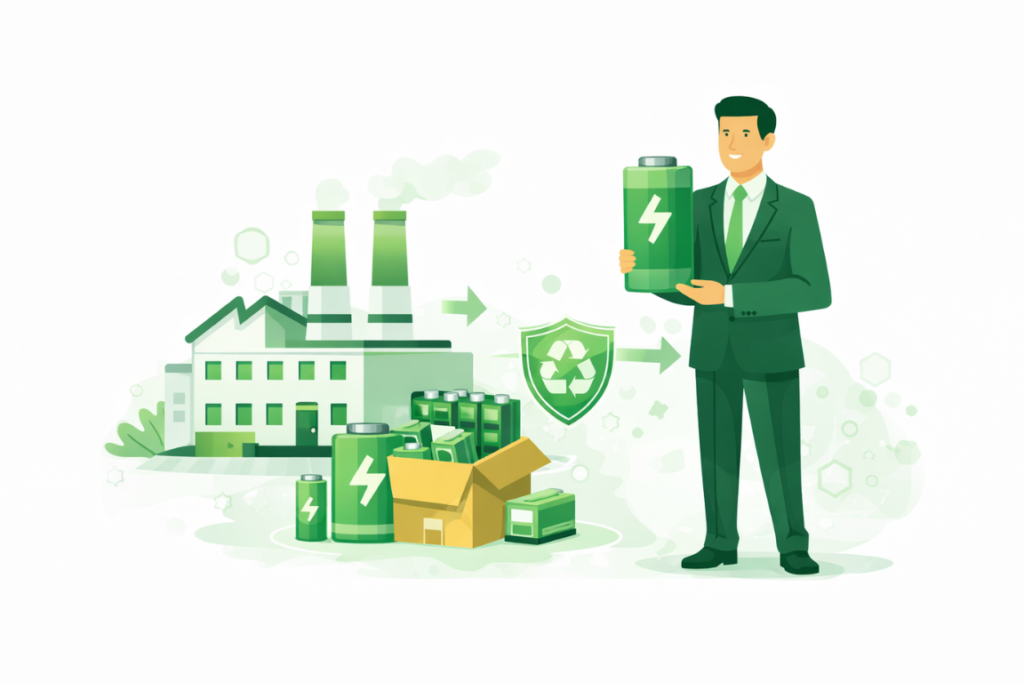
Battery EPR places the responsibility for the environmentally responsible management of end-of-life batteries on Producers, Importers, and Brand Owners. The Battery Waste Management Rules mandate structured collection, recycling, and reporting of battery waste generated from products placed in the Indian market.
Battery Categories Covered Under EPR
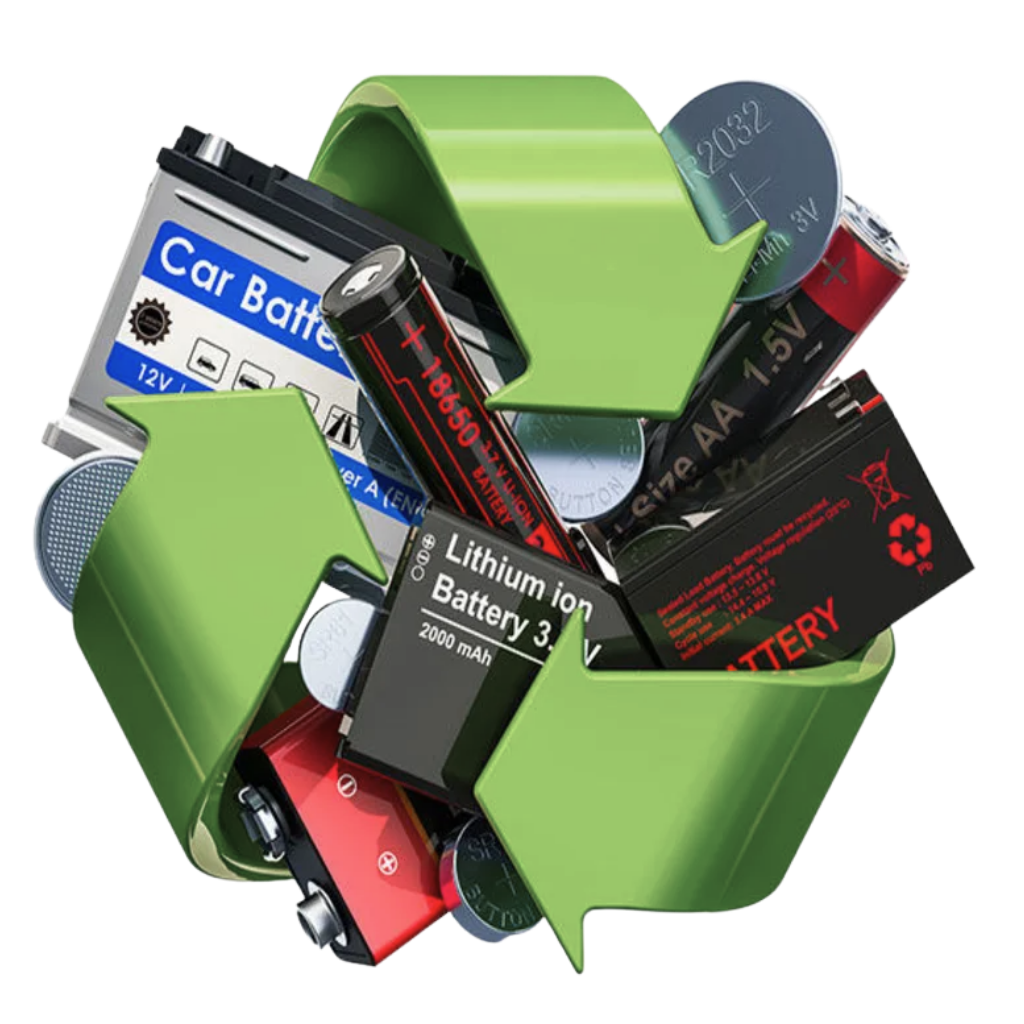
Battery EPR obligations apply across the following categories:
Category I
Portable Batteries
Includes batteries used in consumer electronics such as mobile phones, laptops, toys, and household devices.
Category II
Automotive Batteries
Automotive batteries are used in vehicles, including two-wheelers, three-wheelers, passenger vehicles, and electric vehicles.
Category III
Industrial Batteries
Industrial batteries are used for industrial, commercial, and institutional applications such as telecom towers,UPS systems.
Category IV
EV Batteries
Electric Vehicle batteries are high-capacity batteries used in electric two-wheelers, three-wheelers, passenger vehicles, buses.
Who Needs to Comply
Battery EPR is applicable to:
- Producers of batteries
- Importers of batteries or battery-embedded products
- Brand Owners selling batteries under their own brand
- Entities introducing batteries into the Indian market, regardless of manufacturing location
Applicability is determined by the quantity of batteries placed on the market, nature of business operations, and geographical reach. Compliance is mandatory for both India-wide and state-level operations.
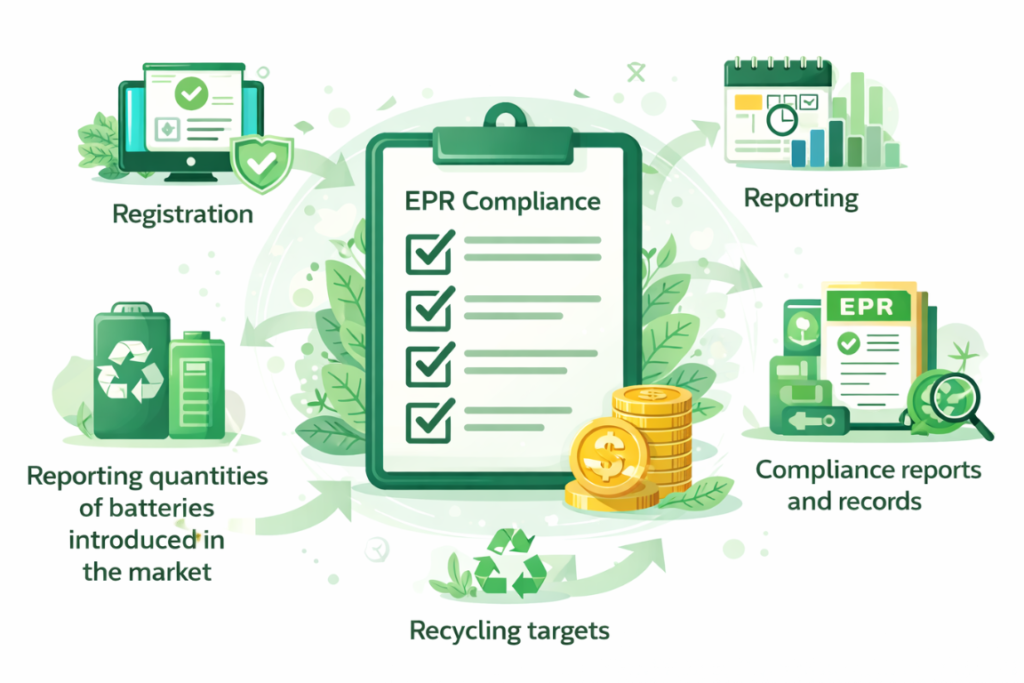
EPR Obligations & Targets
Obligated entities must:
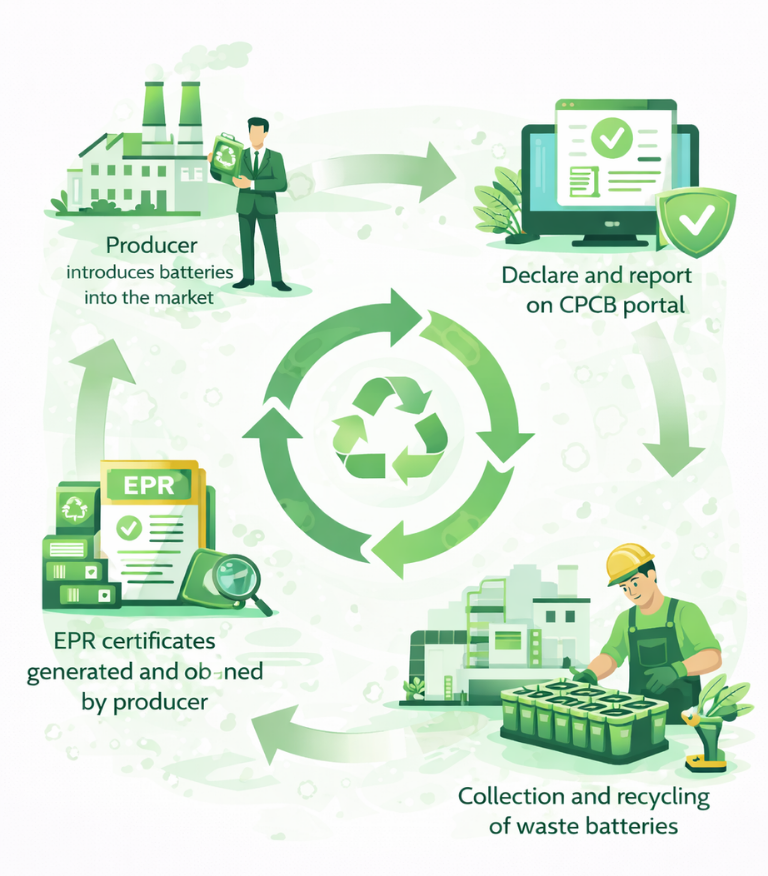
- Register on the CPCB Battery EPR portal
- Declare battery categories and quantities placed in the market
- Meet annual EPR collection and recycling targets
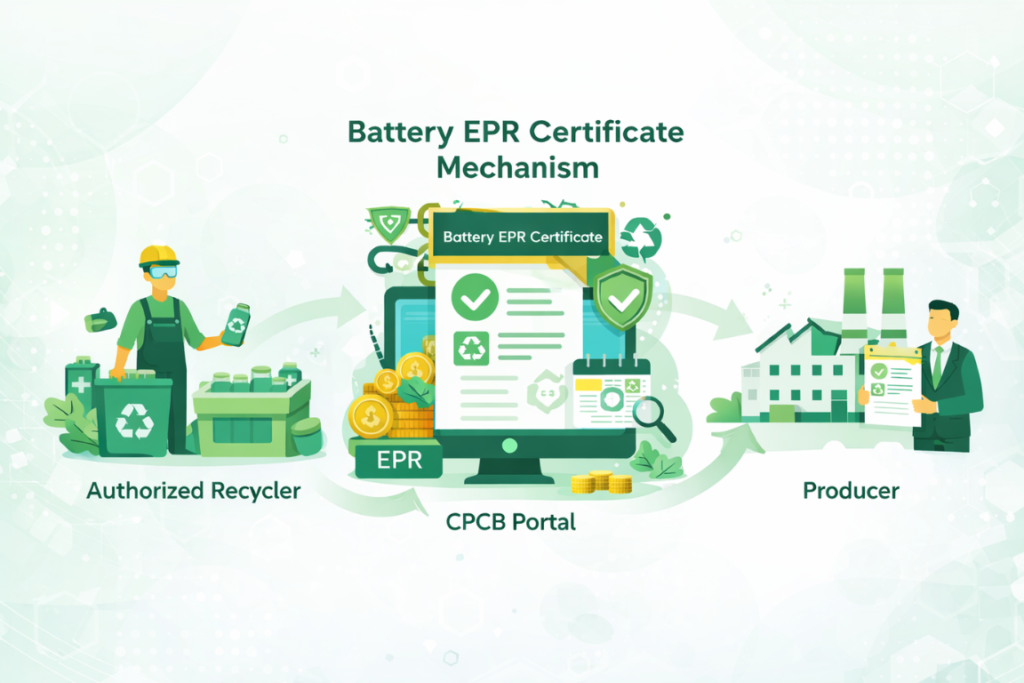
- Engage only with authorised recyclers and processors
- Procure and utilise valid EPR certificates
- Submit periodic and annual compliance reports within prescribed timelines
Failure to meet targets or reporting requirements may result in environmental compensation, penalties, or regulatory restrictions.
Regulatory Registration & Documentation
Battery EPR compliance involves accurate and timely regulatory filings, including:
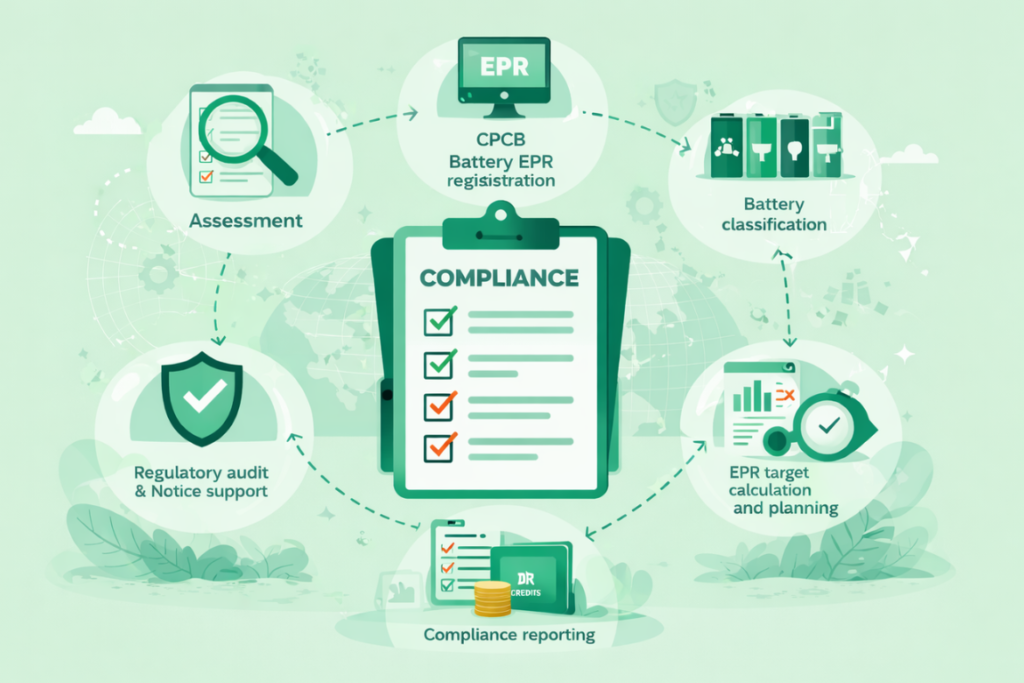
- CPCB Battery EPR registration
- Category-wise battery declarations
- Periodic and annual EPR returns
- Supporting documentation for fulfilment and certificates
- Amendments, renewals, and regulatory correspondence
ReCirculytics ensures all submissions are consistent, traceable, and audit-ready.
How ReCirculytics Supports Battery EPR Compliance
We offer comprehensive support across the Battery EPR lifecycle:
- Battery EPR applicability assessment and gap analysis
- Category mapping and EPR target calculation
- Development of compliant fulfilment strategies
- Coordination with authorised recyclers
- Validation and management of EPR certificates
- Periodic compliance reporting and submissions
- Regulatory audit, inspection, and notice support
Our focus remains on practical execution aligned with regulatory intent.
Our Approach to Battery EPR Compliance
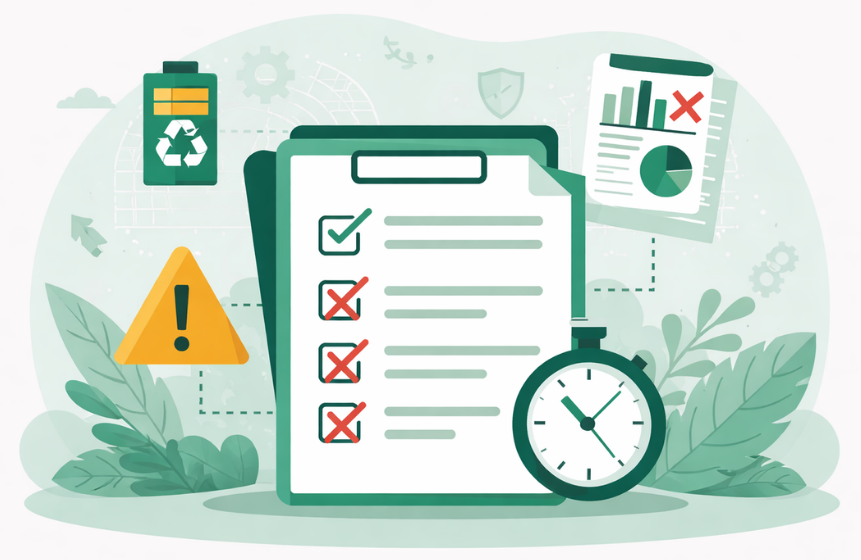
Failure to meet targets or reporting requirements can lead to penalties, restrictions, and increased regulatory scrutiny.

Assess
We evaluate your battery footprint, compliance exposure, and regulatory obligations.

Design
We develop a category-specific EPR strategy aligned with business operations and regulatory requirements.

Execute
We support fulfilment, documentation, and reporting through coordinated implementation.

Monitor & Improve
We track targets, regulatory updates, and continuously optimise compliance performance.
Common Battery EPR Challenges
Businesses often encounter challenges such as:
- Incorrect battery classification
- Shortfall in EPR target fulfilment
- Invalid or non-traceable EPR certificates
- Reporting delays or data inconsistencies
- Regulatory audits and inspections
ReCirculytics mitigates these risks through structured compliance systems and proactive oversight.
Driving Responsible Battery Waste Outcomes
Beyond regulatory compliance, our work contributes to:
- Verified and environmentally sound battery recycling
- Reduced environmental, regulatory, and reputational risk
- Transparent and defensible compliance reporting
- Strengthened circular economy outcomes for battery materials
We help organisations move from reactive compliance to responsible and sustainable battery waste management.
Frequently Asked Questions
Yes. Battery EPR is mandatory for all applicable producers, importers, and brand owners under the Battery Waste Management Rules.
Targets are based on the quantities of batteries placed in the market in previous years, as prescribed by regulatory guidelines.
Yes. Obligations can be fulfilled through valid EPR certificates issued by authorised recyclers, subject to traceability and compliance conditions.
Non-compliance may lead to environmental compensation, penalties, suspension of registration, or increased regulatory scrutiny.
Stay Compliant. Stay Responsible.
ReCirculytics helps you manage Battery EPR with clarity, accountability, and regulatory confidence—ensuring compliance today and sustainability for the future.
Start your Battery EPR compliance journey with ReCirculytics.