
Waste Tyre EPR Compliance in India
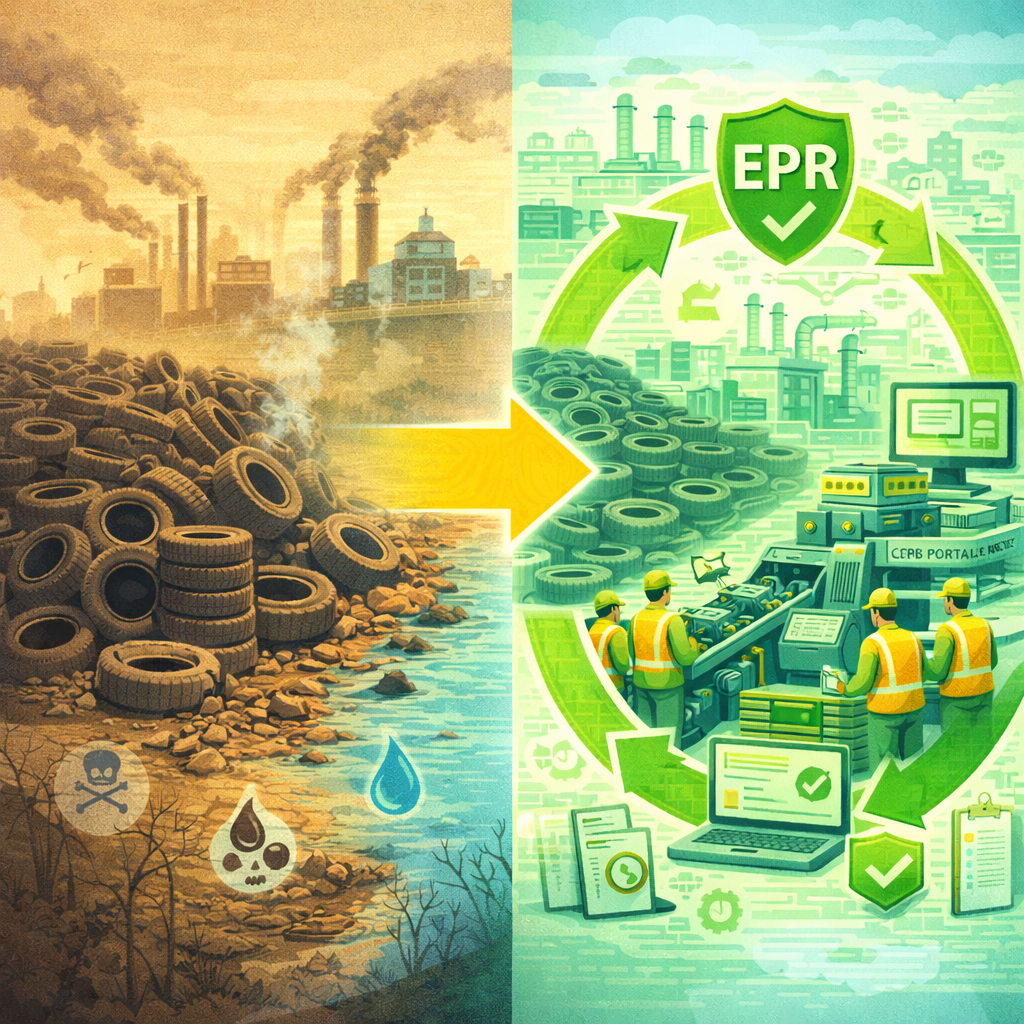
Waste tyres pose significant environmental challenges due to their non-biodegradable nature and the risk of soil, air, and groundwater contamination when improperly disposed of. To address these challenges, the Government of India introduced an Extended Producer Responsibility (EPR) framework for waste tyres under the Hazardous and Other Wastes (Management and Transboundary Movement) Amendment Rules, 2022.
The Waste Tyre EPR framework places responsibility on producers to ensure the environmentally sound recycling of tyres introduced into the Indian market.
ReCirculytics provides end-to-end Waste Tyre EPR compliance services in India, supporting organisations with CPCB portal registration, target planning, EPR certificate generation and procurement, regulatory reporting, and audit readiness.
Our structured compliance systems help organisations meet regulatory requirements while maintaining, transparency, accuracy, and operational control.
Understanding Waste Tyre EPR
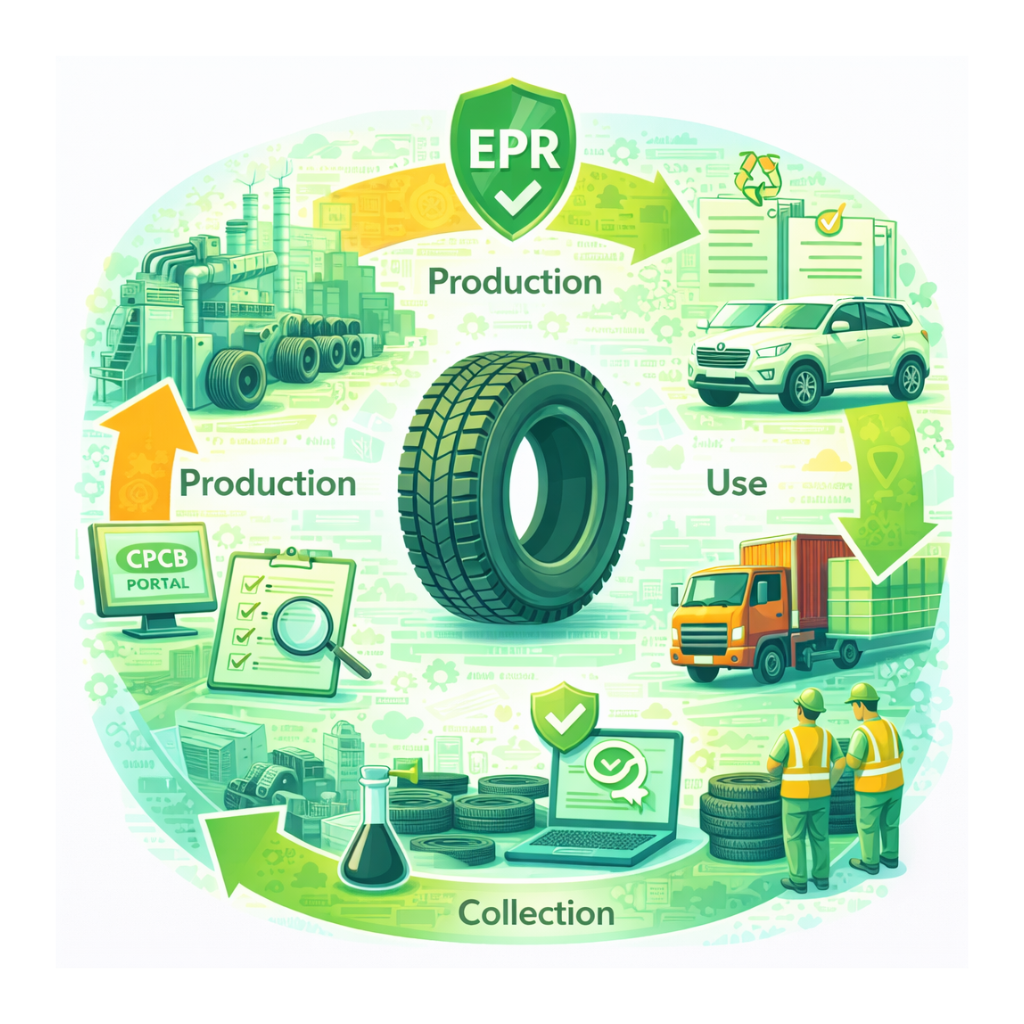
Extended Producer Responsibility (EPR) for waste tyres requires producers to ensure that tyres introduced into the market are responsibly collected and recycled at the end of their life cycle.
Under the regulatory framework, obligated entities must:
- Register on the CPCB Waste Tyre EPR Portal
- Declare quantities of tyres placed in the market
- Fulfil annual recycling targets
- Procure valid EPR credits from authorised recyclers
- Maintain transaction records and compliance documentation
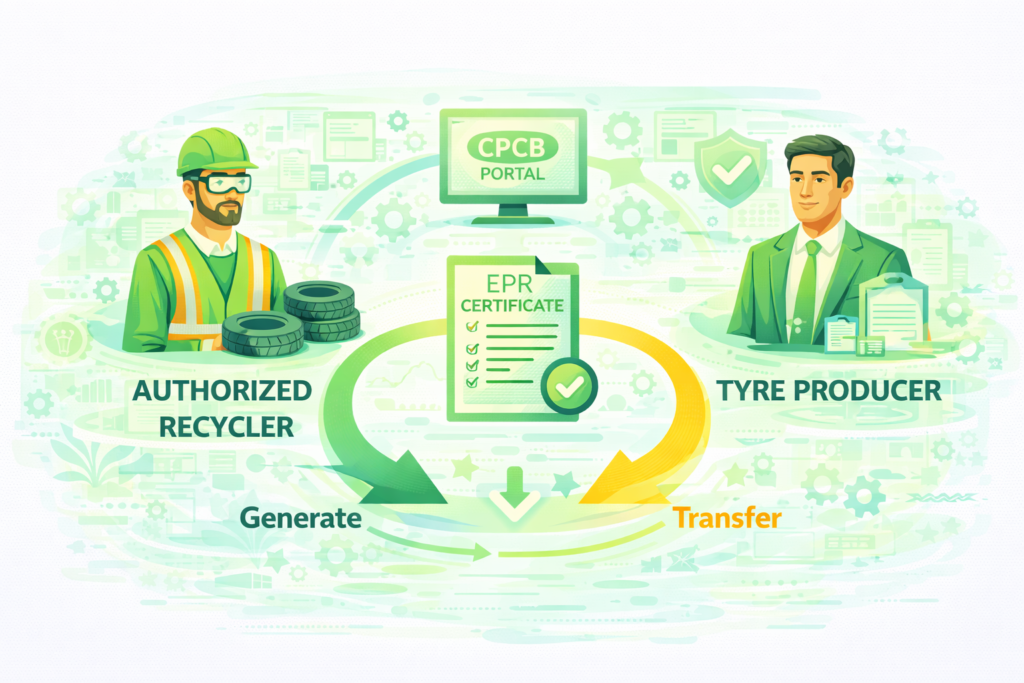
The Waste Tyre EPR system operates through a digital credit-based mechanism, where authorised recyclers generate EPR certificates based on verified recycling of waste tyres. Producers can procure these credits to meet their compliance obligations.
As regulatory monitoring increases, businesses must implement accurate reporting systems and structured compliance processes to ensure regulatory alignment.
Legal Framework Governing Waste Tyre EPR
Waste tyre management in India is governed by:
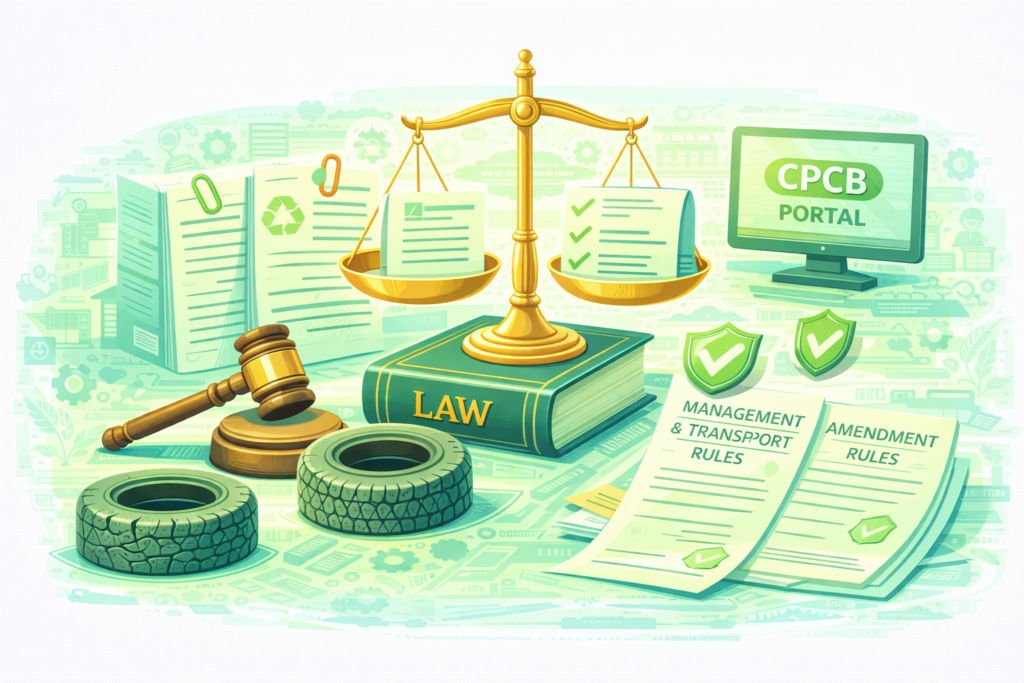
Hazardous and Other Wastes (Management and Transboundary Movement) Rules, 2016 and the Hazardous and Other Wastes (Management and Transboundary Movement) Amendment Rules, 2022
These amendments introduced a digital Extended Producer Responsibility system managed by the Central Pollution Control Board (CPCB) through the Waste Tyre EPR Portal.
The portal enables:
- Registration of obligated entities
- Declaration of tyres placed in the market
- Generation and transfer of EPR credits
- Regulatory monitoring and compliance reporting
Who Needs to Comply with Waste Tyre EPR
Entities required to comply with Waste Tyre EPR regulations include:
Producer
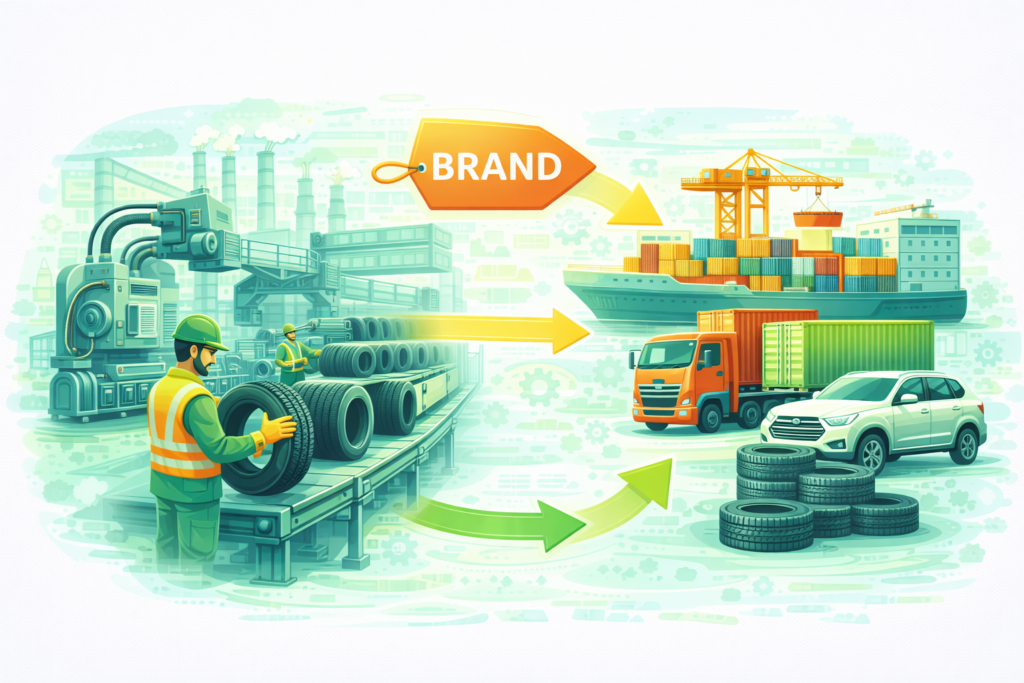
Any person or entity that manufactures, sells under its own brand, or imports new tyres for sale in India, including entities importing vehicles fitted with tyres, automobile manufacturers importing tyres for use in vehicles sold domestically, and entities importing waste tyres.
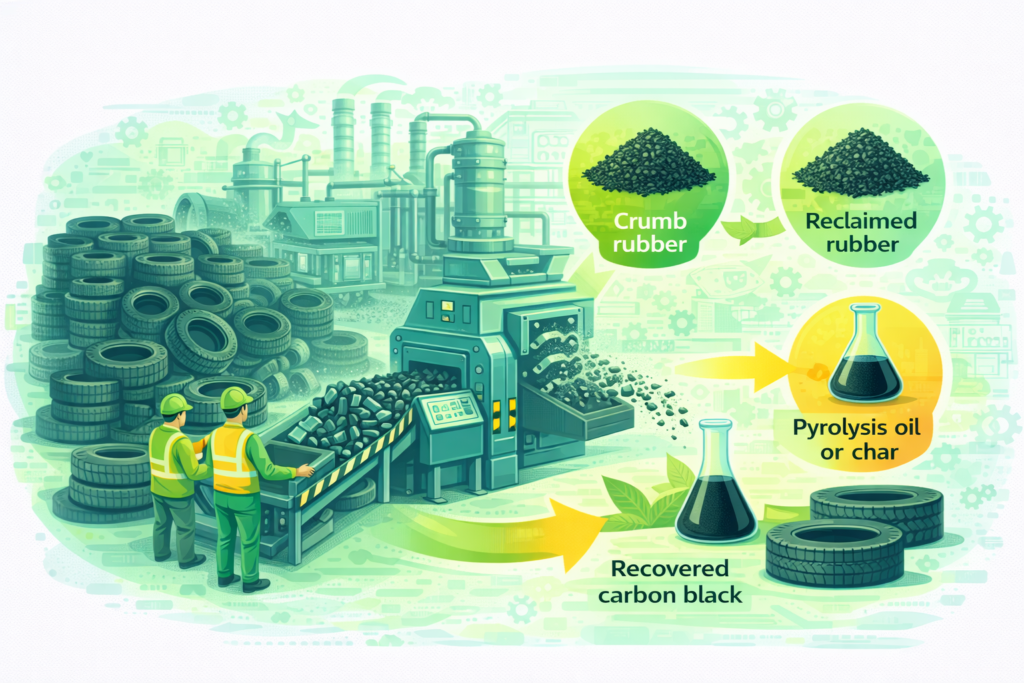
Recycler
Authorised facilities engaged in recycling waste tyres into products such as:
- crumb rubber
- reclaimed rubber
- crumb rubber modified bitumen (CRMB)
- pyrolysis oil or char
- recovered carbon black
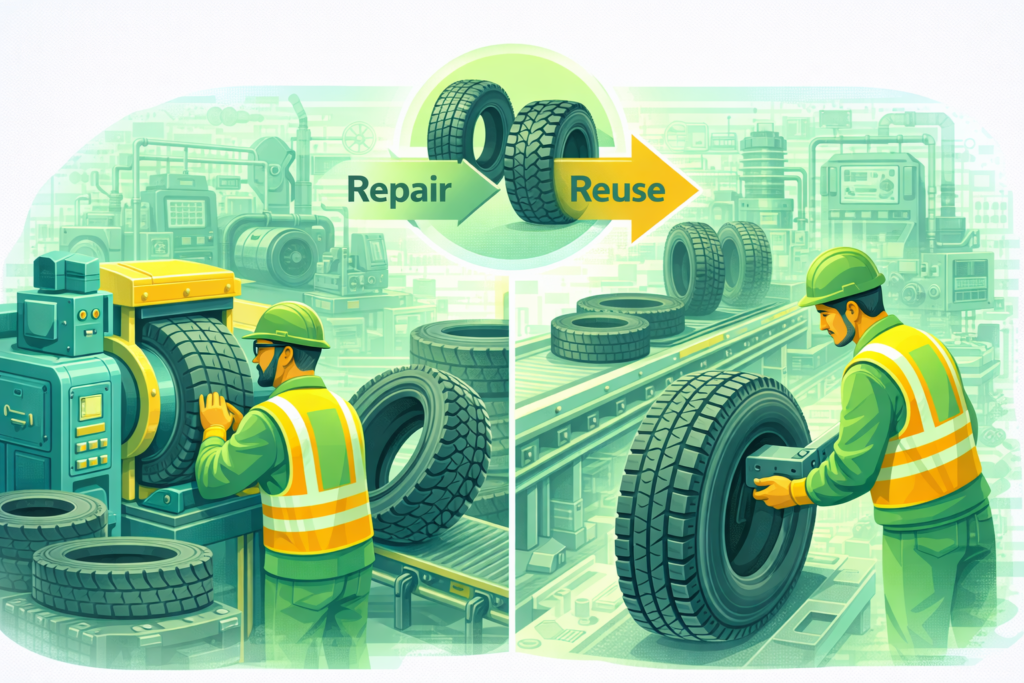
Retreader
Entities that extend the life of used tyres through retreading before final recycling.
All obligated entities must obtain registration on the CPCB Waste Tyre EPR Portal before undertaking regulated activities.
Waste Tyre EPR Recycling Targets
The Waste Tyre EPR framework prescribes progressive recycling targets for producers based on tyre quantities introduced into the market in previous years.
| Compliance Year | Recycling Target |
|---|---|
| 2022–2023 | 35% of tyres manufactured or imported in 2020–2021 |
| 2023–2024 | 70% of tyres manufactured or imported in 2021–2022 |
| 2024–2025 onwards | 100% of tyres manufactured or imported two years earlier |
Importers of waste tyres must fulfil recycling obligations equivalent to 100% of the quantity imported in the previous year.
The import of waste tyre for the purpose of producing pyrolysis oil or char is prohibited.
These targets ensure that tyres introduced into the market are recycled through authorised facilities.
Waste Tyre EPR Credit System
The Waste Tyre EPR framework operates through a digital EPR credit mechanism managed by CPCB.
Authorised recyclers generate EPR credits based on the quantity of waste tyres recycled. These certificates can be transferred to producers through the CPCB portal to fulfil recycling obligations.
Key elements of the system include:
- EPR certificate generation by authorised recyclers
- Digital traceability through the CPCB EPR portal
- Defined validity periods for EPR certificates
- Mandatory documentation for regulatory audits
Proper verification of EPR certificates is critical to ensure regulatory compliance and avoid invalid transactions.
Key Regulatory Requirements for Waste Tyre EPR
Businesses introducing tyres into the Indian market must comply with several regulatory requirements under the Waste Tyre EPR framework.

CPCB EPR Portal Registration
Producers, importers, recyclers, and retreaders must obtain registration on the CPCB Waste Tyre EPR Portal.

Reporting Tyres Placed in the Market
Producers must declare the quantity of tyres introduced into the market.

Meeting Recycling Targets
Producers must ensure recycling of tyres in accordance with prescribed annual targets.

Procurement of EPR Credits
Producers must procure valid EPR credits generated by authorised recyclers.

Compliance Reporting
Obligated entities must maintain documentation and submit compliance reports through the CPCB portal.
Failure to comply with these requirements may result in environmental compensation, regulatory action, or suspension of EPR registration.
Waste Tyre EPR Compliance Process
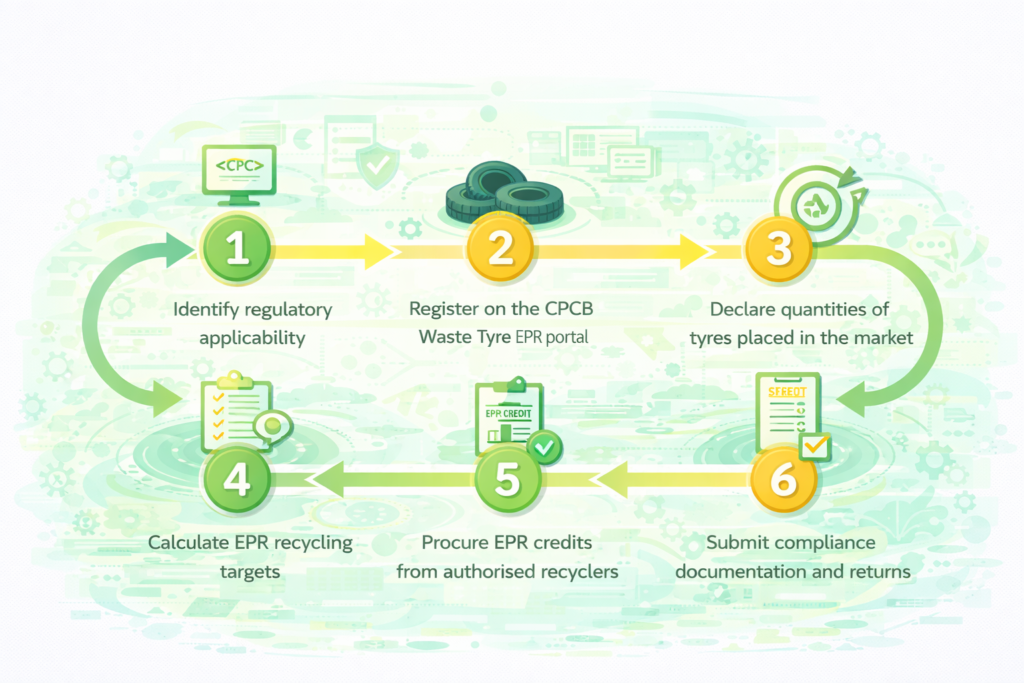
Businesses typically follow a structured process to comply with Waste Tyre EPR regulations in India:
- 1. Identify regulatory applicability
- 2. Register on the CPCB Waste Tyre EPR portal
- 3. Declare quantities of tyres placed in the market
- 4. Calculate EPR recycling targets
- 5. Procure EPR credits from authorised recyclers
- 6. Submit compliance documentation and returns
A structured compliance process reduces regulatory risk and ensures accurate fulfilment of EPR obligations.
How ReCirculytics Supports Waste Tyre EPR Compliance
ReCirculytics provides comprehensive Waste Tyre EPR compliance support tailored to the operational realities of tyre producers and importers.
Our services include:
- Waste Tyre EPR applicability assessment
- CPCB Waste Tyre EPR portal registration
- Tyre sales and reporting frameworks
- EPR target calculation and compliance planning for Producers
- EPR Credit Generation for Recyclers and Retreaders
- Procurement of EPR credits from authorised recyclers
- Compliance reporting and documentation management
- Regulatory notice handling and audit support
Our approach focuses on practical execution supported by regulatory expertise, ensuring that all compliance activities remain transparent and audit-ready.


Common Compliance Challenges
Organisations managing Waste Tyre EPR often encounter challenges such as:
- Incorrect reporting of tyre quantities
- Shortfall in EPR recycling targets
- Lack of guidance on EPR Credit Generation mechanism
- Delays in regulatory reporting
- Changing regulatory interpretations
ReCirculytics helps organisations mitigate these risks through structured compliance systems and proactive regulatory guidance.
Frequently Asked Questions
Yes. Producers and importers of tyres must comply with the Waste Tyre EPR framework introduced under the Hazardous and Other Wastes Amendment Rules, 2022.
Targets are calculated based on the quantity of tyres manufactured or imported in previous years as prescribed in the regulatory framework.
Yes. Producers can meet their recycling obligations by procuring valid EPR certificates generated by authorised recyclers.
Non-compliance may lead to environmental compensation, regulatory penalties, or suspension of EPR registration.
Begin Your Waste Tyre EPR Compliance Journey
Waste Tyre EPR compliance requires structured reporting, reliable recycling partnerships, and defensible compliance documentation.
ReCirculytics helps organisations navigate the regulatory landscape with clarity, accountability, and operational confidence.
Connect with our team to assess your Waste Tyre EPR obligations and build a compliant, audit-ready framework.