

Battery Waste EPR Compliance in India
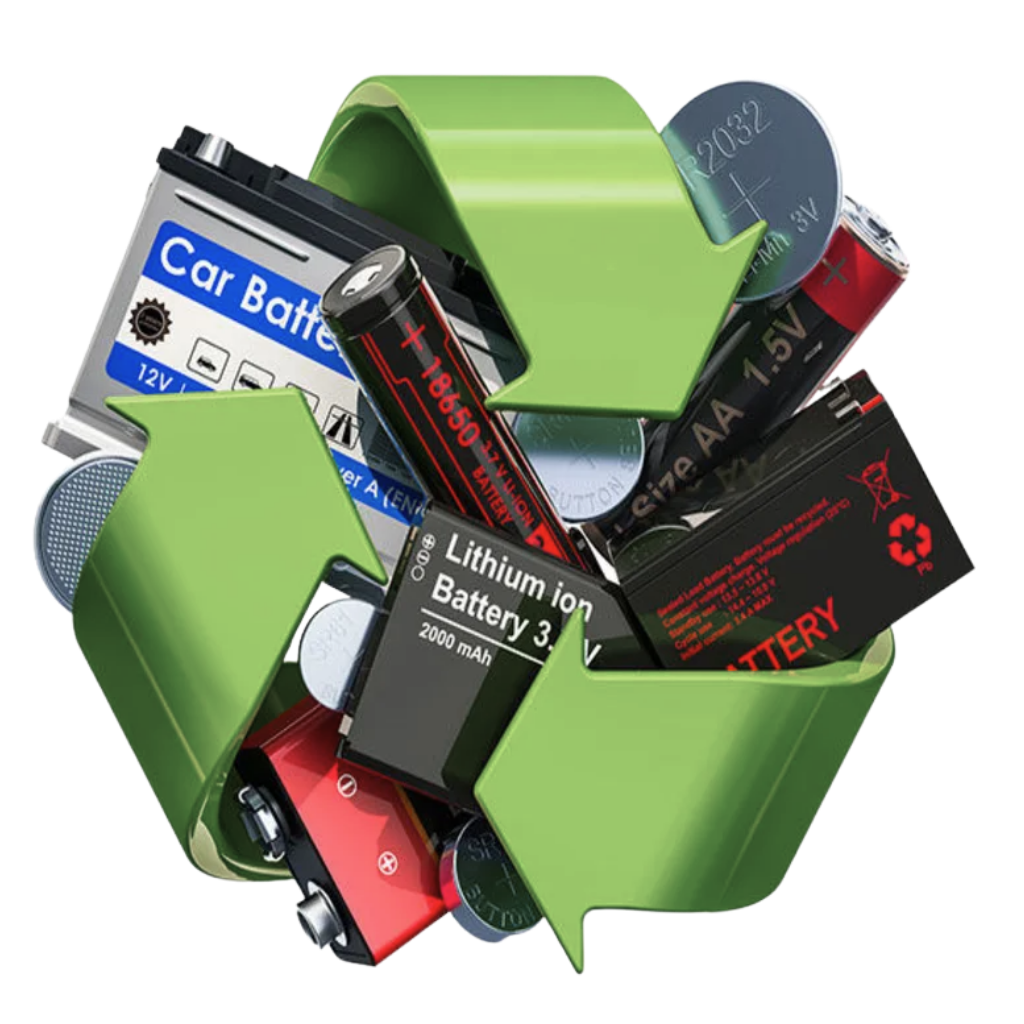
Batteries are a critical and highly regulated waste stream under India’s Extended Producer Responsibility (EPR) framework.
Managing Battery EPR Compliance with Regulatory Clarity
Understanding Battery EPR
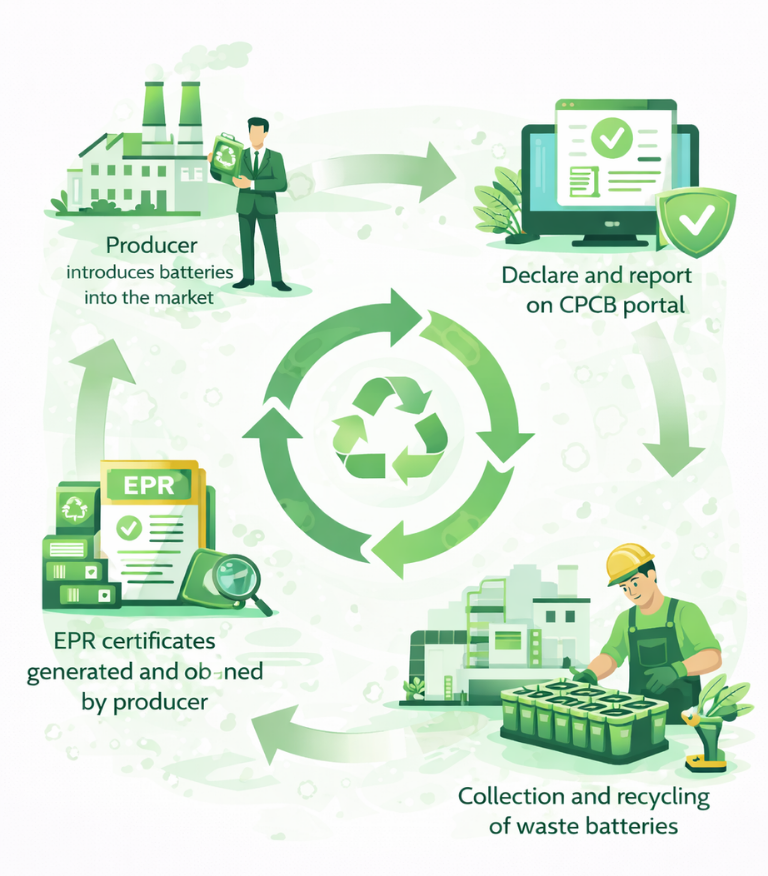
Extended Producer Responsibility (EPR) for battery waste places responsibility on producers for the collection, recycling, and environmentally sound management of waste batteries generated from batteries introduced into the market.
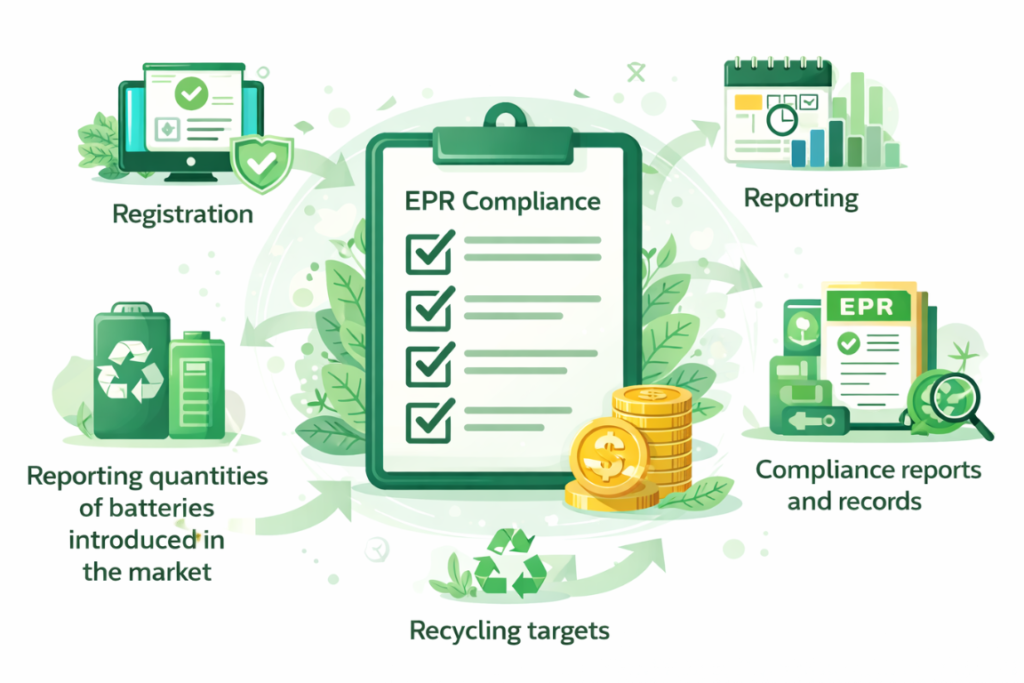
Under the Battery Waste Management Rules, 2022, producers must:
- Register on the CPCB Battery EPR Portal
- Declare quantities of batteries placed in the market
- Meet annual collection and recycling targets
- Procure EPR certificates generated by authorised recyclers
- Maintain records and submit compliance reports
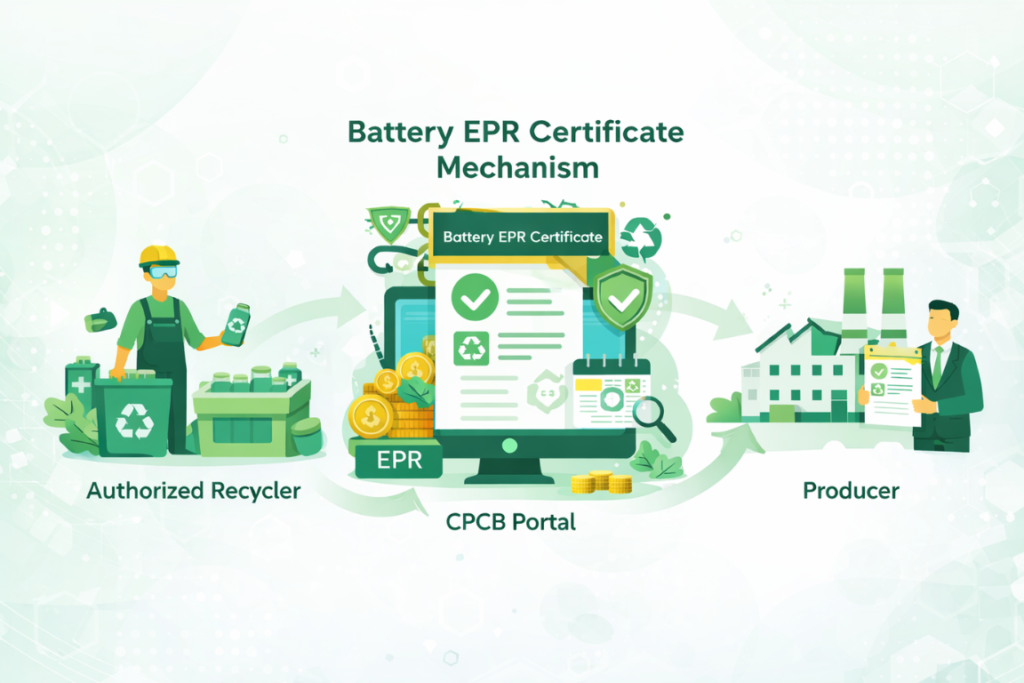
The Battery EPR framework operates through a digital certificate-based mechanism, where recycling activities generate EPR certificates that producers can procure to fulfil their obligations.Under the Battery Waste Management Rules, 2022, producers must:
As regulatory monitoring increases, companies must establish accurate reporting systems and structured compliance processes to meet their obligations effectively.
Battery Categories Covered Under EPR
I
Portable Batteries
Batteries used in consumer electronics such as mobile phones, laptops, cameras, and household devices.
II
Automotive Batteries
III
Industrial Batteries
IV
Electric Vehicle Batteries
Who Needs to Comply
Entities required to comply with Battery EPR obligations include:
Producer
Recycler
Refurbisher
Battery EPR Obligations and Targets
- Registration on the CPCB Battery EPR portal
- Reporting quantities of batteries introduced into the market
- Meeting annual recycling and material recovery targets
- Procuring valid EPR certificates from authorised recyclers
- Maintaining transaction records and supporting documentation
- Submitting compliance reports through the CPCB portal
The Battery EPR Certificate Mechanism
- EPR certificate generation by authorised recyclers
- Digital traceability through the CPCB EPR portal
- Defined validity periods for EPR certificates
- Mandatory documentation for regulatory verification
Key Regulatory Requirements Under Battery EPR
Organisations managing batteries in India must comply with several regulatory obligations under the Battery Waste Management Rules, 2022.

CPCB EPR Registration
Producers, recyclers, and refurbishes must obtain registration on the CPCB Battery EPR Portal.

Reporting Batteries Placed in the Market
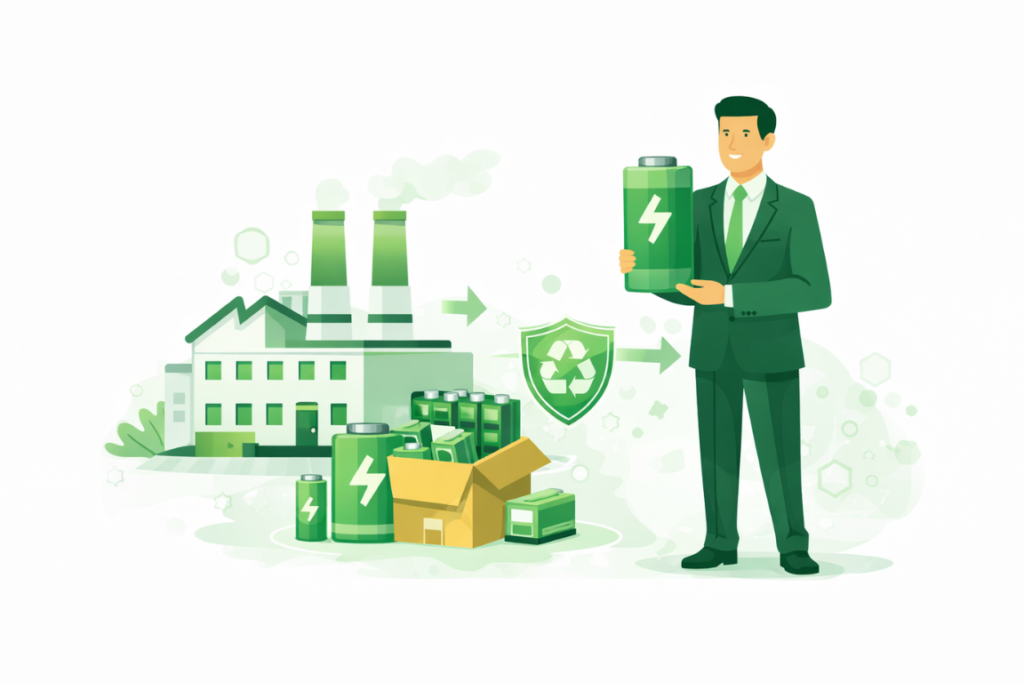
Producers must declare the quantity of batteries introduced into the market.
Collection and Recycling Targets
Producers must ensure that a defined percentage of batteries introduced into the market are collected and recycled through authorised recyclers.
EPR Credit Procurement
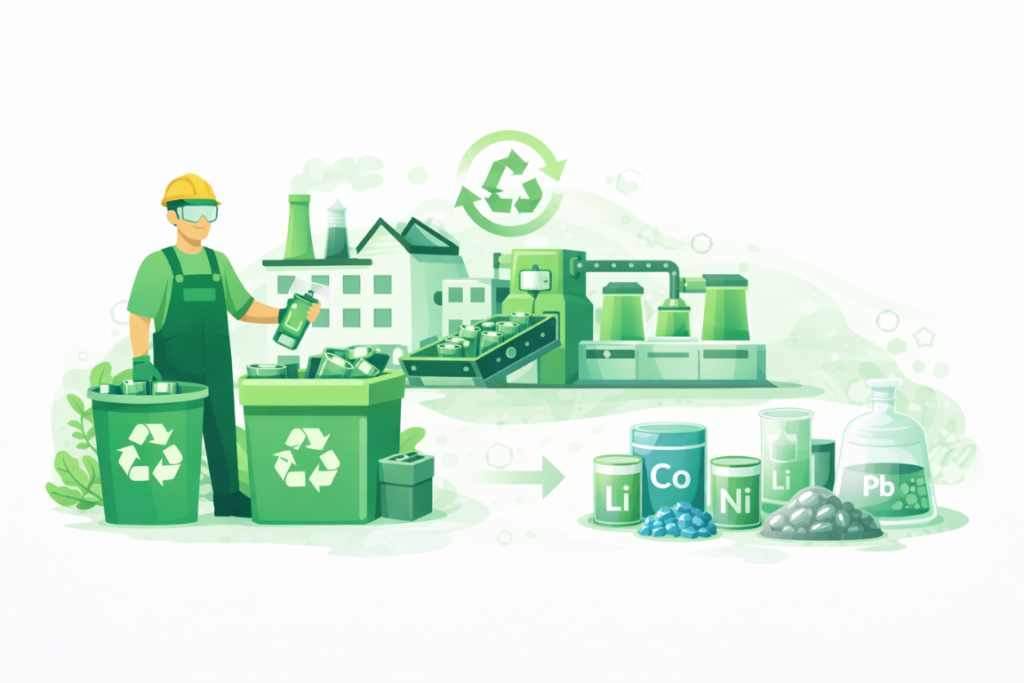
Recycling activities generate EPR certificates which producers can procure to meet their compliance targets.
Compliance Reporting
Producers must maintain records and submit compliance reports through the CPCB portal. Failure to meet these requirements may result in environmental compensation and regulatory penalties.
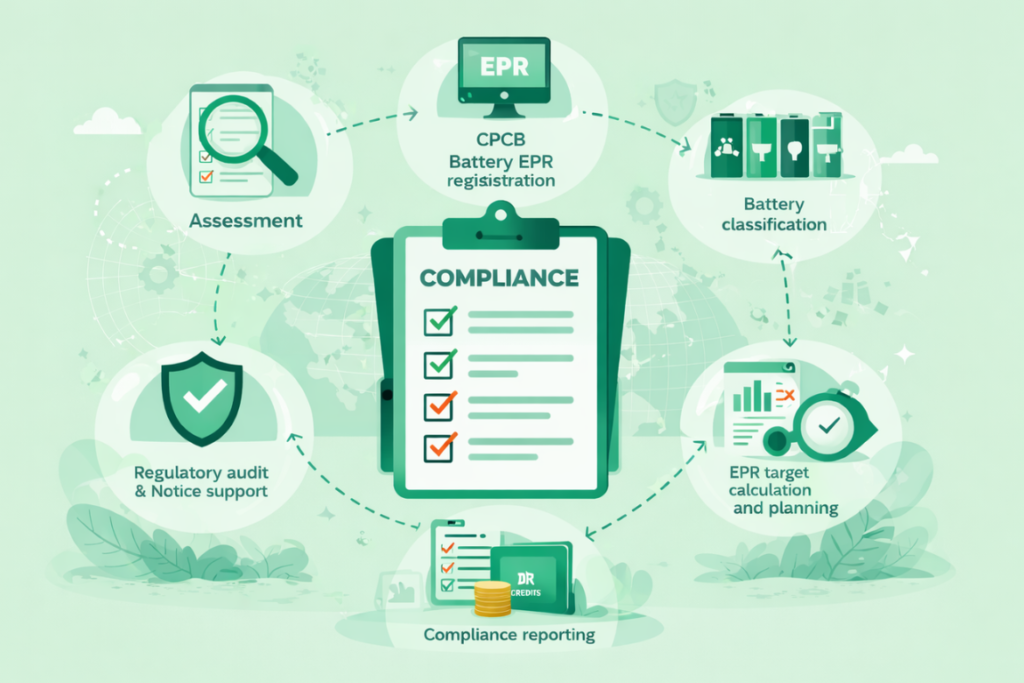
How ReCirculytics Supports Battery EPR Compliance
- Battery EPR applicability assessment
- CPCB Battery EPR portal registration support
- Battery category classification
- EPR target calculation and compliance planning
- Procurement of EPR credits from authorised recyclers
- Compliance reporting and documentation management
- Regulatory audit and notice response support
Our Structured Compliance Approach

Assess
We analyse your battery portfolio, regulatory applicability, and compliance exposure.

Design
We develop a tailored EPR strategy aligned with regulatory requirements.

Execute
We support implementation through credit procurement, reporting, and compliance documentation.

Monitor & Improve
We continuously track compliance performance and regulatory updates to optimise your EPR strategy.
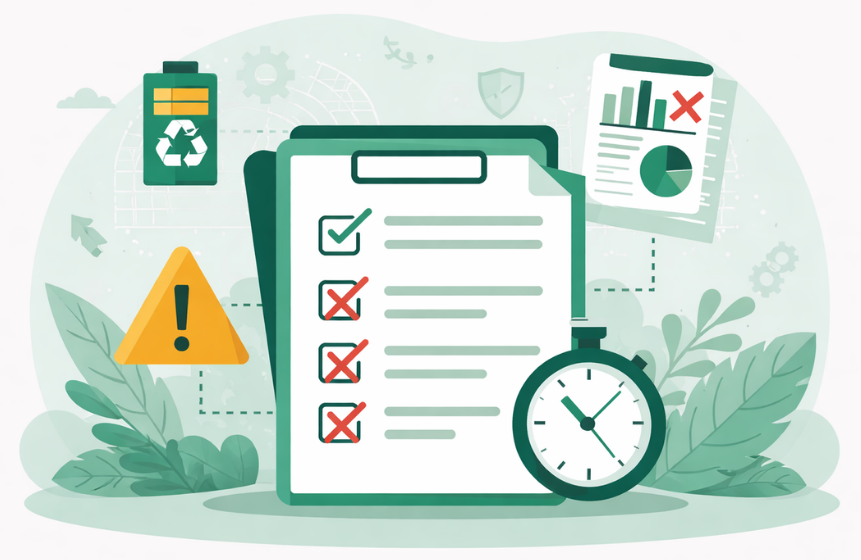
Common Compliance Challenges
- Incorrect classification of battery categories
- Inaccurate reporting of batteries placed in the market
- Shortfall in EPR target fulfilment
- Delays in regulatory reporting and portal filings
ReCirculytics helps organisations mitigate these risks through structured compliance frameworks and proactive regulatory guidance.
Frequently Asked Questions
Yes. Producers introducing batteries or battery-containing equipment into the Indian market must comply with the Battery Waste Management Rules, 2022.
Targets are calculated based on the quantity of batteries introduced into the market in previous years and the regulatory collection and recycling targets prescribed under the rules.
Yes. Producers can fulfil their obligations by procuring valid EPR certificates generated by authorised recyclers through the CPCB portal.
Failure to comply with Battery EPR requirements may result in environmental compensation, regulatory enforcement actions, or suspension of EPR registration.
Begin Your Battery EPR Compliance Journey
Battery EPR compliance requires structured planning, accurate reporting, and reliable recycling partnerships.
ReCirculytics helps organisations navigate the evolving battery waste regulations with clarity, accountability, and operational confidence.