

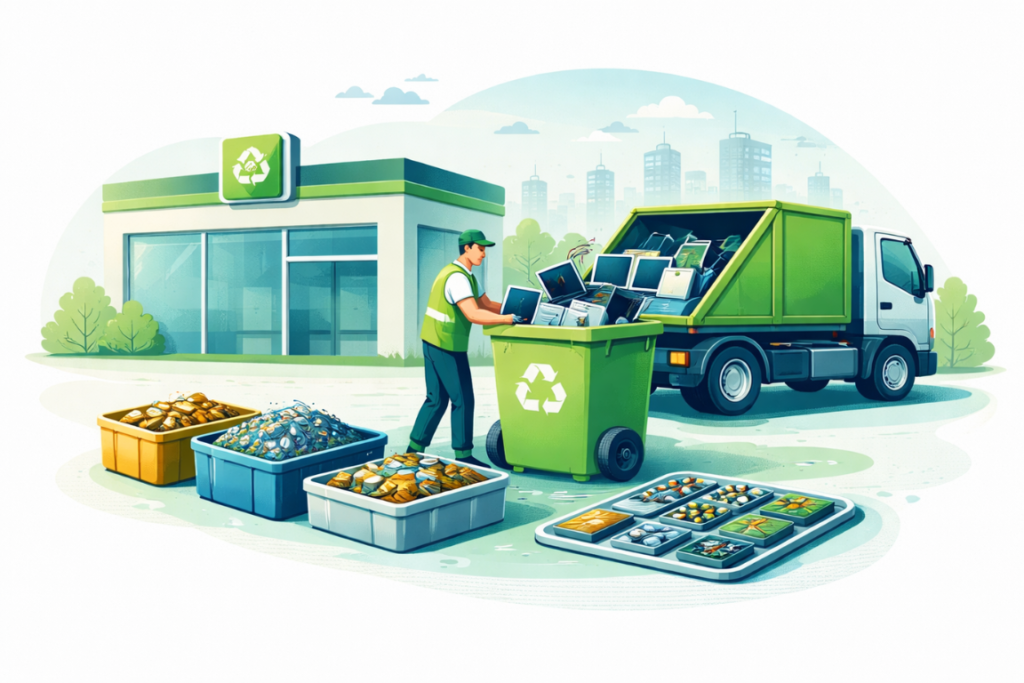

E-Waste EPR Compliance in India

ReCirculytics provides structured and compliant E-Waste EPR solutions to help producers and importers meet their obligations under the E-Waste Management Rules.

Managing E-Waste EPR with Clarity and Regulatory Confidence

Electronic waste (e-waste) is one of the fastest-growing waste streams globally and is subject to strict regulatory oversight in India. Under the E-Waste (Management) Rules, 2022, Extended Producer Responsibility (EPR) places clear obligations on producers of electrical and electronic equipment to ensure environmentally sound management of e-waste generated from their products.

ReCirculytics supports organisations across the full lifecycle of E-Waste EPR compliance in India—from registration and target planning to EPR credit procurement, reporting, and regulatory audit readiness.

Our structured compliance approach enables businesses to meet their regulatory obligations while maintaining transparency, traceability, and operational efficiency.

Understanding E-Waste EPR

Extended Producer Responsibility (EPR) for e-waste places the responsibility for the environmentally sound management of end-of-life electrical and electronic equipment on Producers.

Under the E-Waste (Management) Rules, 2022, producers are required to:

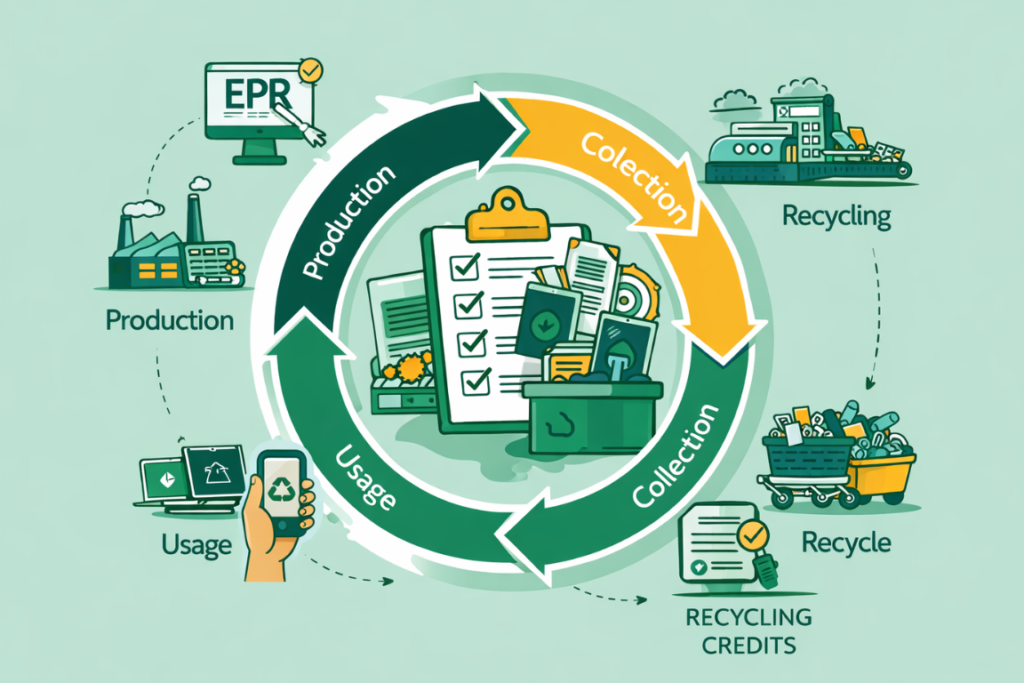
The E-Waste EPR framework operates through a digital credit-based system, where recycling activities generate EPR credits that Producers can procure to meet their obligations.

With increasing regulatory scrutiny and evolving compliance mechanisms, businesses must ensure that their EPR strategies are accurate, transparent, and audit-ready.

Who Needs to Comply

Entities required to register on the EPR E-Waste Portal include:

All obligated entities must obtain registration through the CPCB E-Waste EPR Portal before undertaking regulated activities.

Categories of E-Waste Covered

E-waste obligations apply across a wide range of electrical and electronic equipment, including:

Information technology and telecommunication equipment

Consumer Electrical, Electronics and Photovoltaic Panels

Medical Devices (With the Exception of All Implanted and Infected Products)

Large & Small Electrical and Electronic Equipment

Electrical and Electronic Tools
Electrical and Electronic Equipment Covered Under EPR

The E-Waste (Management) Rules apply to a wide range of Electrical and Electronic Equipment (EEE) listed under Schedule I of the Rules.

Categories of electrical and electronic equipment

Electrical and electronic equipment code

Information technology and telecommunication equipment

ITEW 1-27

Consumer Electrical and Electronics and Photovoltaic Panels

CEEW 1-19

Large and Small Electrical and Electronic Equipment

LSEEW 1-34

Electrical and Electronic Tools (With the exception of large- Scale Stationary Industrial Tools)

EETW 1-8

Toys, Leisure and Sports Equipment

TLSEW 1-6

Medical Devices (With the Exception of All Implanted and Infected Products)

MDW 1-10

Laboratory Instruments

LIW 1-2

E-Waste EPR Obligations and Targets

Under the E-Waste (Management) Rules, 2022, Producers must fulfil quarterly and annual recycling targets based on the quantity of electrical and electronic equipment introduced into the market.

Key compliance requirements include:

Failure to meet EPR obligations may lead to environmental compensation, regulatory enforcement actions, or suspension of EPR registration.

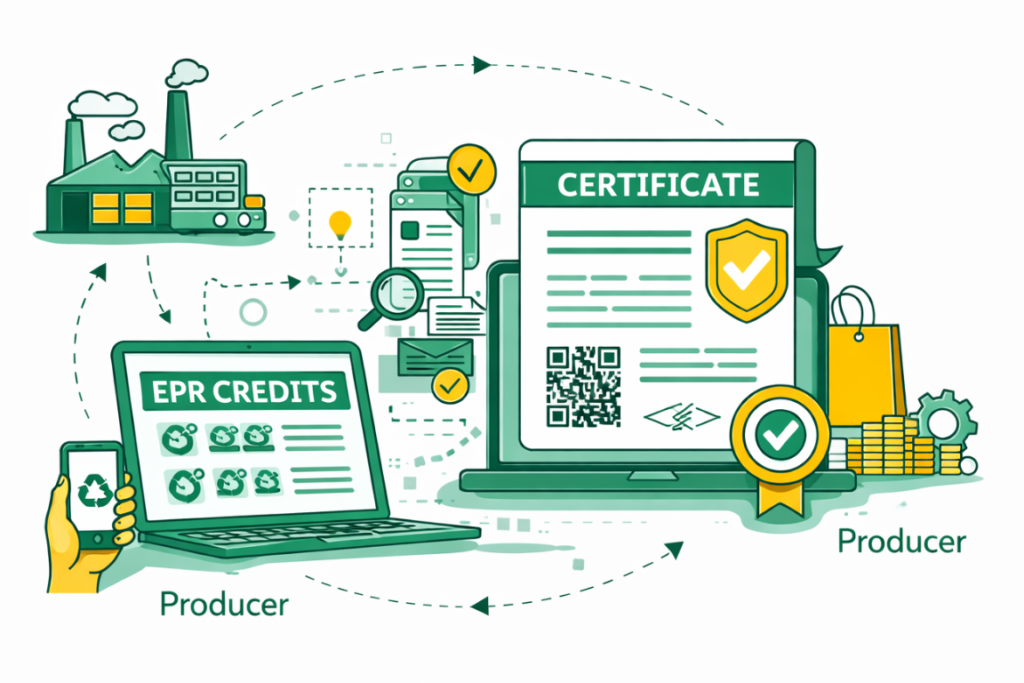
The E-Waste EPR Certificate System

The E-Waste EPR framework operates through a digital credit mechanism.

Authorised recyclers generate EPR credits based on the quantity of the e-waste recycled. These credits can then be purchased by Producers to fulfil their recycling obligations.

Key elements of the system include:

Proper validation of EPR credits is critical to ensure that obligations are fulfilled in accordance with regulatory requirements.

E-Waste EPR Compliance Process in India

Businesses typically follow a structured process to comply with the E-Waste EPR framework:

Identify applicable electrical and electronic equipment categories under Schedule I
Obtain registration on the CPCB E-Waste EPR Portal

Declare quantities of equipment placed in the market
Calculate annual EPR recycling targets
Procure EPR credits from authorised recyclers

Submit compliance reports and maintain regulatory documentation


A structured compliance framework helps organisations reduce regulatory risk and ensure transparent fulfilment of EPR obligations.

How ReCirculytics Supports E-Waste EPR Compliance

ReCirculytics provides end-to-end E-Waste EPR compliance support designed to help organisations navigate regulatory complexity and operational challenges.

Our services include:

Our focus is on structured execution backed by regulatory expertise, ensuring that all compliance activities are transparent, verifiable, and defensible during audits.

Our Structured Compliance Approach

ReCirculytics follows a systematic approach to help organisations manage E-Waste EPR obligations effectively.

Assess

We analyse your product portfolio, regulatory applicability, and compliance exposure.

Design

We develop a structured EPR strategy aligned with regulatory requirements and operational realities.

Execute

We support implementation through credit procurement, reporting, and compliance documentation.

Monitor & Improve

We continuously monitor compliance performance, regulatory updates, and opportunities for operational improvement.

Common Compliance Challenges

Many organisations face challenges when managing e-waste EPR obligations, including:

ReCirculytics helps organisations address these challenges through structured compliance frameworks and proactive regulatory guidance.

Frequently Asked Questions

Yes. Producers of electrical and electronic equipment must comply with the E-Waste (Management) Rules, 2022 and fulfil their EPR obligations.

Targets are based on the quantity of electrical and electronic equipment placed in the market in previous years based on the average life span of the EEE, as defined in the regulatory guidelines.

Yes. Producers can meet their recycling targets by procuring valid EPR credits generated by authorised recyclers on the CPCB EPR portal.

Non-compliance may result in environmental compensation, regulatory action, or suspension of EPR registration.

Begin Your E-Waste EPR Compliance Journey

E-Waste EPR compliance requires structured planning, accurate reporting, and reliable recycling partnerships.

ReCirculytics helps organisations navigate the evolving regulatory framework with clarity, accountability, and operational confidence.

Connect with our team to assess your E-Waste EPR obligations and build a compliant, audit-ready framework.